Quick Answer
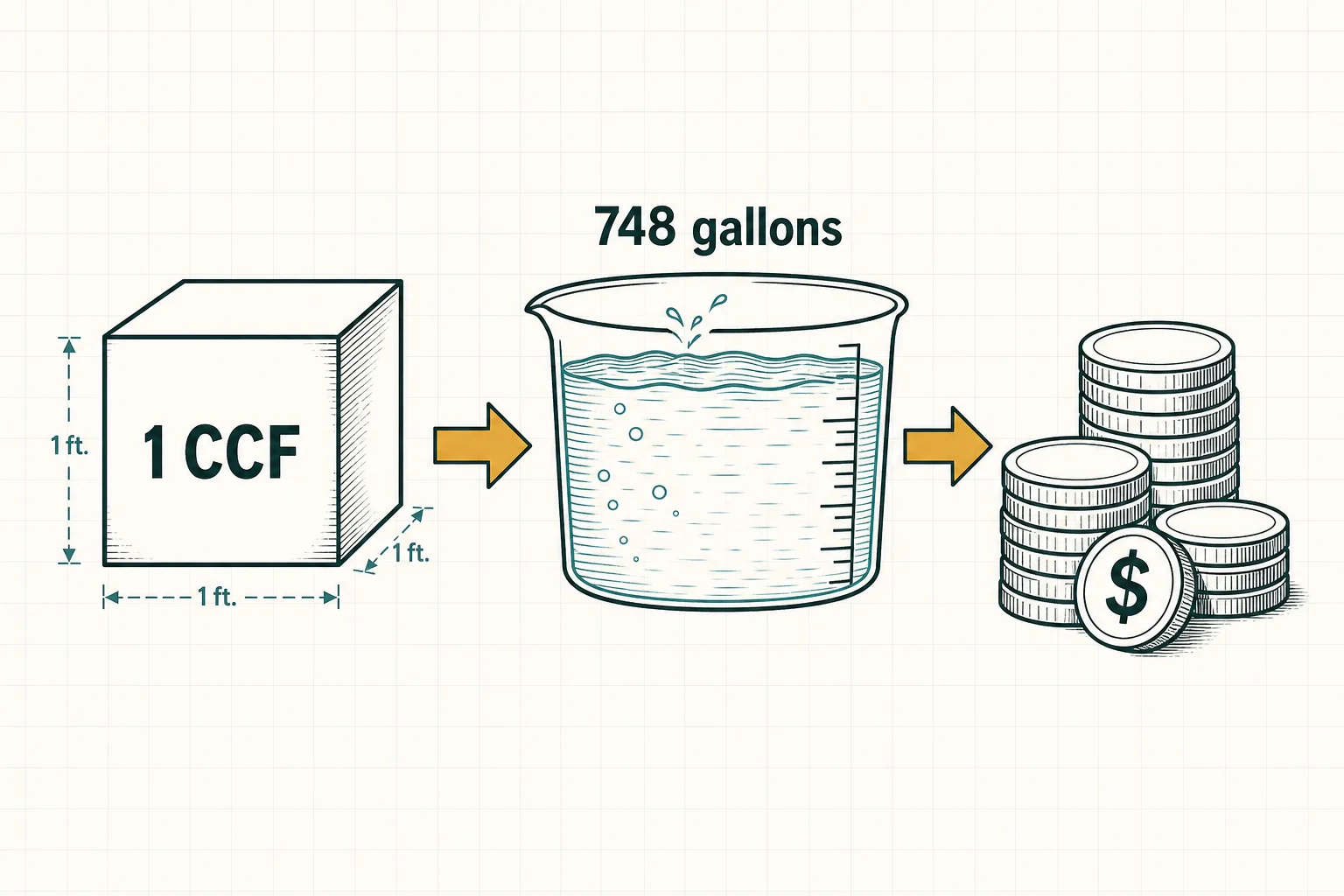
One CCF (centum cubic feet) is 100 cubic feet — about 748 gallons. Enter your bill’s usage below to convert it, price it under a flat or tiered rate, and get the gallons-per-person-day baseline that makes period-to-period comparison possible.
Your water bill numbers
The Conversion, By Hand
No JavaScript? The math is three lines:
| Step | Example (8 CCF, flat $4.10/CCF, 3 people, 30 days) |
|---|---|
| Gallons: CCF × 748 | 8 × 748 = 5,984 gallons |
| Cost: CCF × rate | 8 × $4.10 = $32.80 (usage portion) |
| Baseline: gallons ÷ days ÷ people | 5,984 ÷ 30 ÷ 3 = ~66 gal/person/day |
Utilities round the conversion differently — some bill in gallons, some in CCF, a few in cubic feet or 1,000-gallon units. EPA WaterSense notes that rate structures and units vary by utility, so confirm which unit your bill uses before comparing bills. What is CCF on a water bill? walks through reading the unit off a real statement.
Why the Per-Person Baseline Matters More Than Any National Average
A single number from your own bill beats a generic target: it reflects your household size, your climate, your fixtures, and your irrigation. Track the gallons-per-person-day figure across similar seasons — a jump that survives a billing-length correction is the cheapest early warning that something changed, from a new roommate to a silent toilet leak. See how to calculate water use per person for the full method and its caveats.
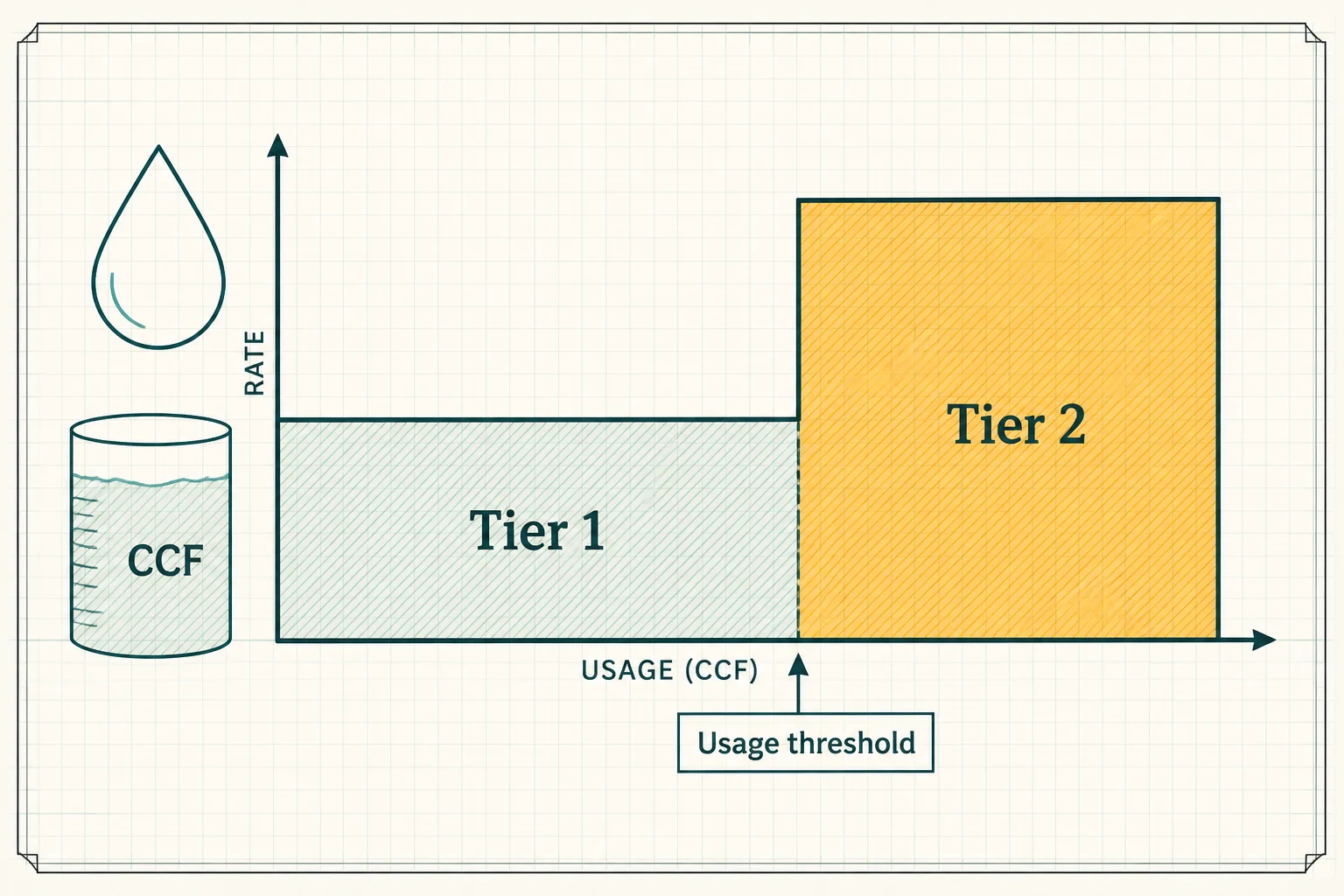
Tiered rates make the cost line bend: if your utility charges more per CCF past a threshold, the calculator’s tier mode shows how much of your bill sits in the expensive tier — and how tiered water rates work explains why cutting the top tier is worth more than cutting the first.
Catch the Leak Before It Bills
Usage-based math only sees a leak after the meter has run. If your baseline keeps climbing with no explanation, a whole-home monitor watches the flow continuously and can close the valve on its own — see the Moen Flo Smart Water Monitor & automatic shutoff on Amazon (monitors flow, pressure, and temperature; detects drops-per-minute leaks; Moen 900-001 spec). For a lower-cost first step, check your water meter’s leak indicator.