Data through 2026-07 · Source: U.S. EIA · Last refreshed October 2026
## Quick AnswerThe Aerostar MERV 11 20x25x1 six-pack is the default buy for most forced-air homes — but at the time of writing, Aerostar’s own MERV 13 six-pack costs less, so the honest answer starts with your blower, not the price tag. The MERV 11 6-pack runs about $62 ($10.40 per filter, 4.7 stars from 2,200+ ratings, sold and shipped by Amazon), while the MERV 13 6-pack sits around $52 ($8.70 per filter, 4.5 stars, 3,000+ ratings). Prices rotate constantly — the boxes below always show current pricing. If your system can handle MERV 13, buy the 13. If your manual is vague or your blower is older or marginal, MERV 11 is the safer, still-excellent choice. Before anything else, read what MERV rating do I need — that page explains the rating ladder itself; this page is the purchase companion. If your real problem is a system that runs constantly, start with why your HVAC runs all day instead of a filter upgrade: the Aerostar MERV 11 6-pack on Amazon.
First, What a MERV 11 Filter Actually Is
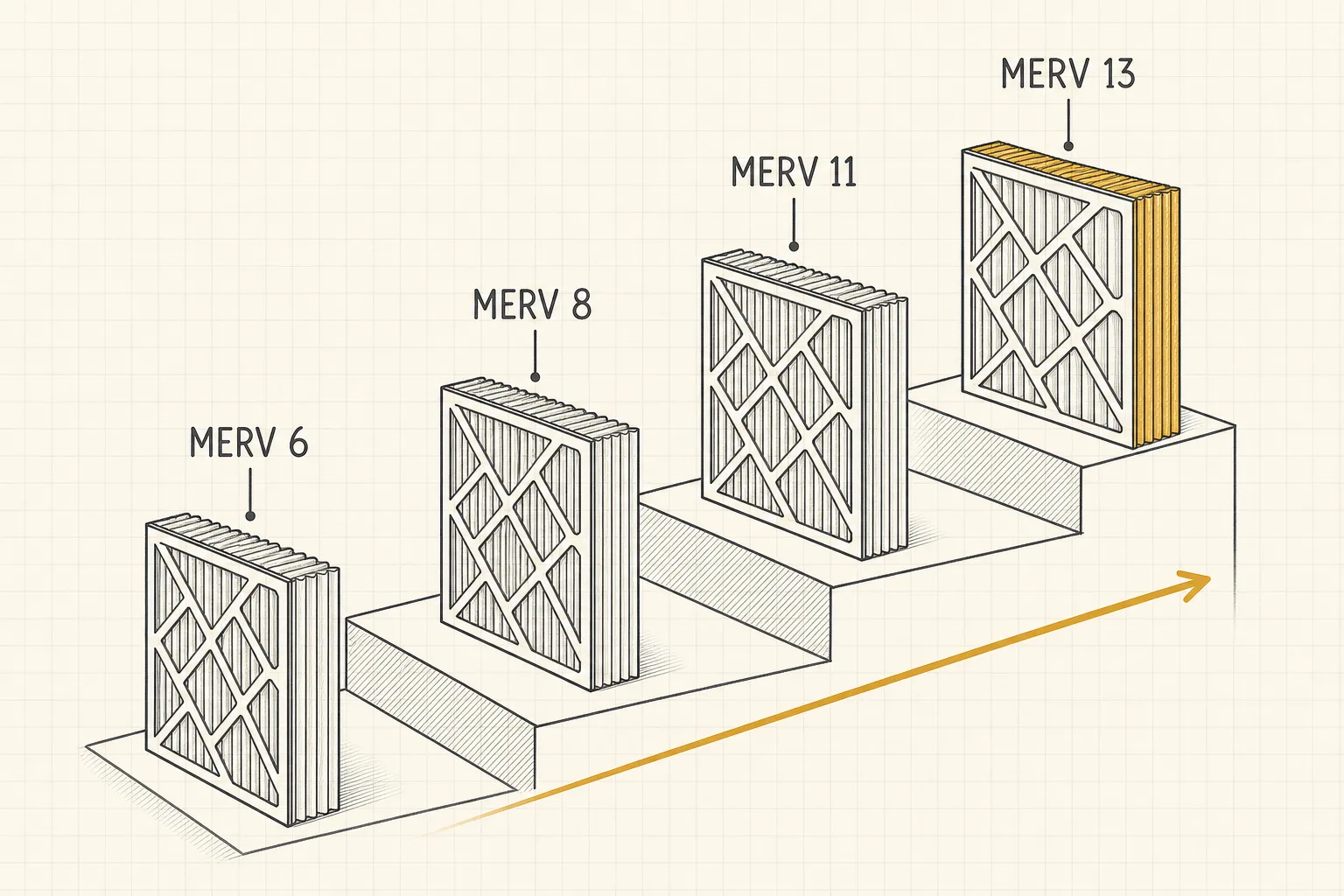
MERV — Minimum Efficiency Reporting Value — is a 1-to-16 scale describing how well a filter captures particles of specific sizes under standardized test conditions. A MERV 11 pleated filter is the “advanced residential” tier: it captures a large share of particles in the 1–3 micron range (fine dust, pet dander, many pollen grains, smoke particles) and nearly all of the larger stuff (lint, dust mite debris, carpet fibers). MERV 13 pushes into the range that matters for smoke and finer particles; MERV 8 is the basic dust-holding tier.
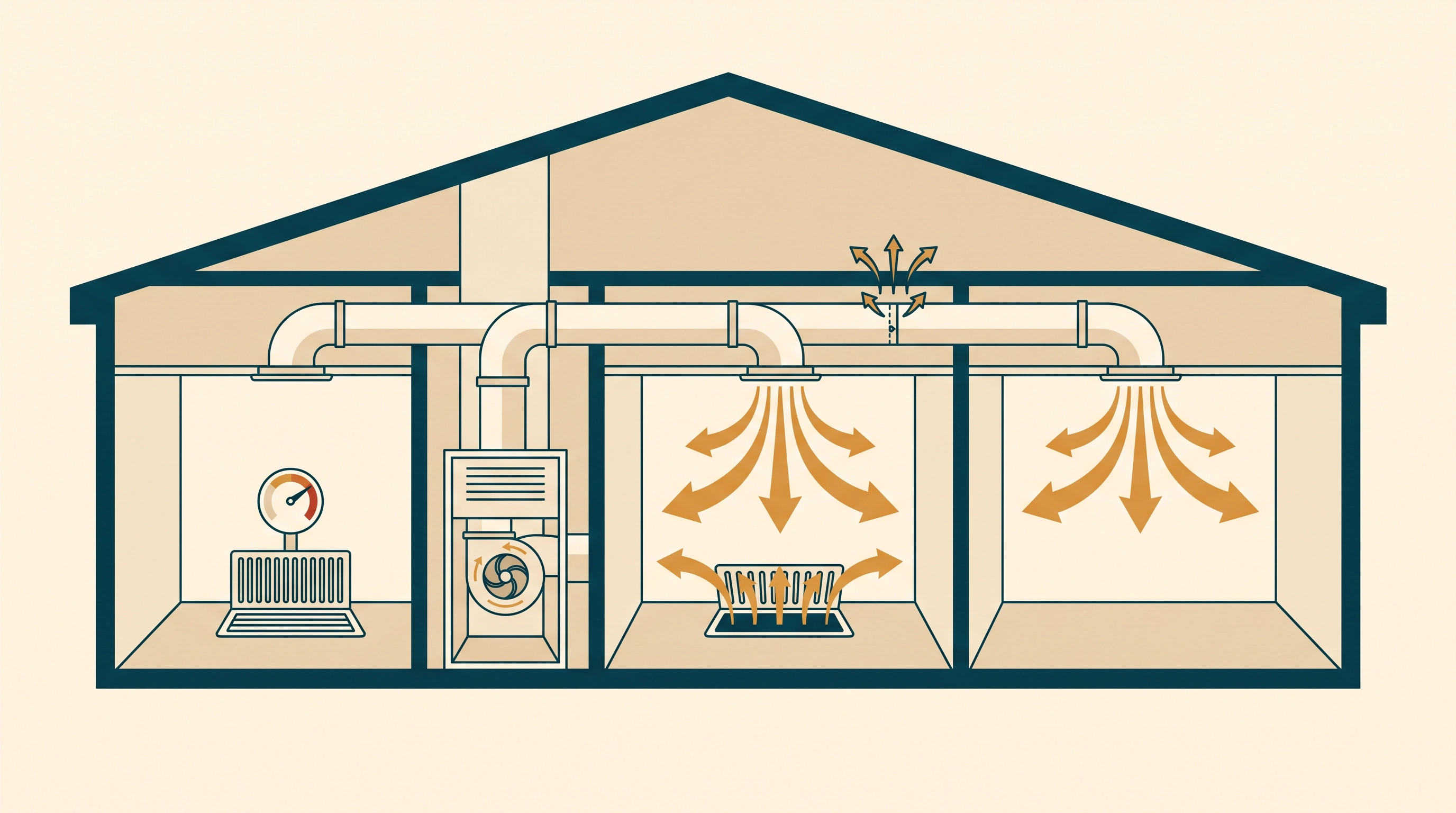
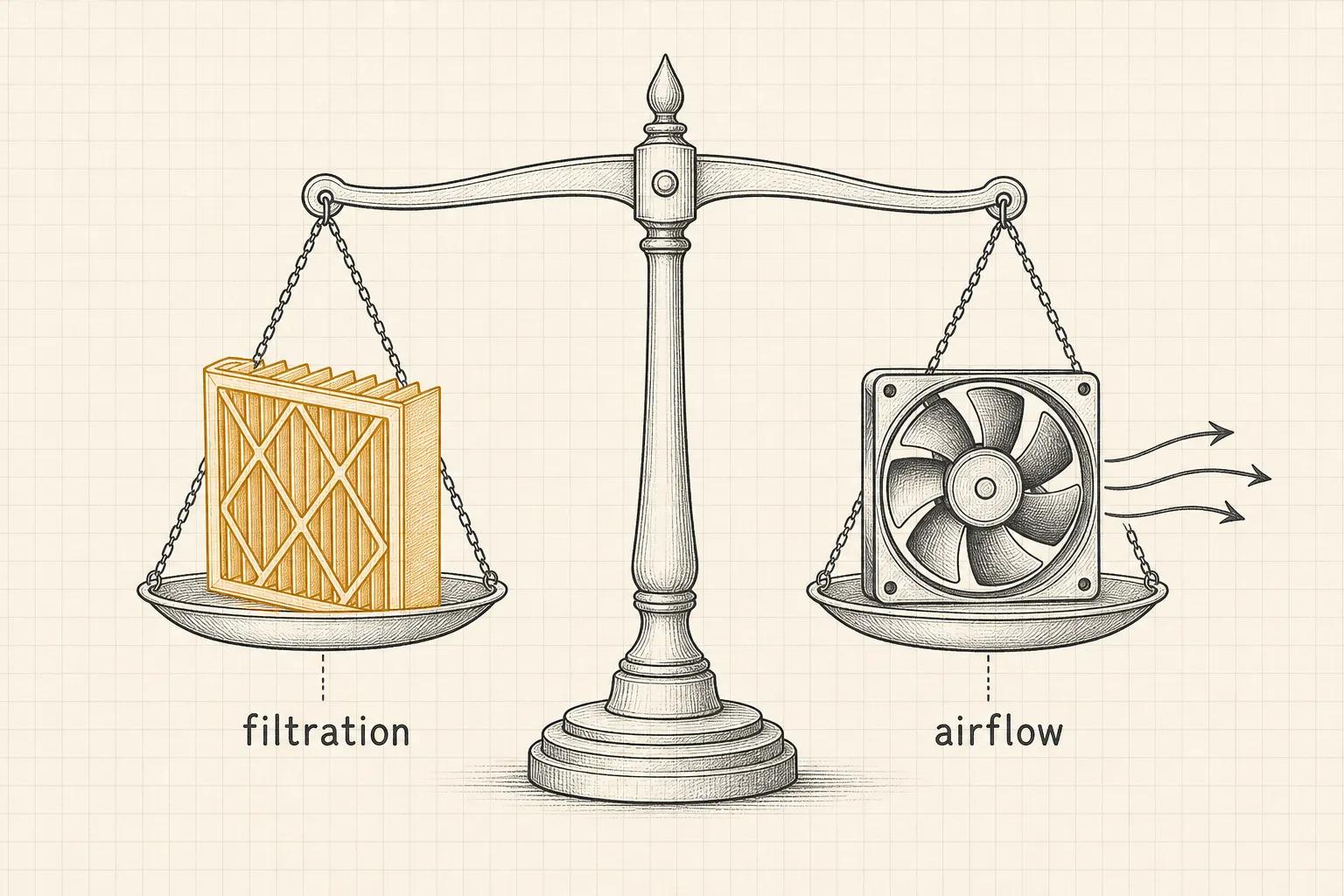
The trap is thinking of MERV as a free upgrade. Every step up the ladder buys capture at the cost of pressure drop — resistance to airflow. Your blower is sized to push air through a certain resistance; a denser filter makes it work harder, move less air, and in marginal systems can contribute to long run times, frozen coils in cooling season, or heat-exchanger stress. That is why the EPA’s consumer guidance says to pick a filter rated at least MERV 13 or as high as your system fan and filter slot can accommodate — the second half of that sentence is the part Reddit filter threads keep rediscovering.[1]
The Reddit Question, Answered Honestly
Community threads on HVAC and filter topics reliably surface the same three answers, and we cite them as community signal, not gospel: (1) buy pleated filters in multi-packs rather than single fiberglass ones, (2) MERV 11 is the sweet spot for most homes with pets or allergies, and (3) check your furnace manual before going to MERV 13. That consensus is broadly right, and it matches the EPA’s framing. What the threads undersell is the fourth answer: sizes matter more than brands. A $10.40 filter in the wrong size is worthless; a correctly measured slot is the whole game. Nominal size (20x25x1) is not actual size (19.75 x 24.75 x 0.75 inches for both filters below) — measure your slot’s width, height, and depth before ordering anything.
The Two Six-Packs, Compared
The primary: Aerostar MERV 11 6-pack
Best when: you want the community-consensus sweet spot with maximum blower safety margin, or your manual caps you at MERV 11.
Pleated MERV 11 (MPR 1200 / FPR 7) filter, actual size 19.75 x 24.75 x 0.75 in. Captures fine dust, pet dander, and smoke particles with moderate airflow resistance. Sold and shipped by Amazon; 4.7 stars, 2,200+ ratings at the time of writing.
Check price on Amazon As an Amazon Associate we earn from qualifying purchases. Price & availability shown on Amazon.com.This is the filter we’d hand to most homeowners without a second thought: pleated, MERV 11 (MPR 1200 / FPR 7 equivalent), actual size 19.75 x 24.75 x 0.75 in, sold and shipped by Amazon, 4.7 stars across 2,200+ ratings at the time of writing. At ~$62 for six, it’s ~$10.40 per filter — and with Subscribe & Save the per-filter price drops further (the listing showed ~$8.83–9.35 per filter at 10–15% savings when we checked). At a 60–90 day replacement cadence, six filters is roughly a year of changes.
Pleated MERV 11 (MPR 1200 / FPR 7) filter, actual size 19.75 x 24.75 x 0.75 in. Captures fine dust, pet dander, and smoke particles with moderate airflow resistance. Sold and shipped by Amazon; 4.7 stars, 2,200+ ratings at the time of writing.
Check price on Amazon Price & availability shown on Amazon.com — we may earn a commission.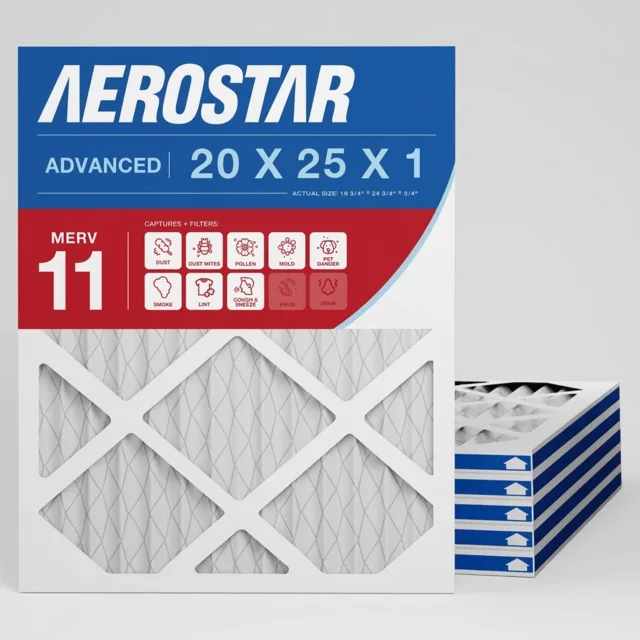
The step-up that currently costs less: Aerostar MERV 13 6-pack
Best when: your system tolerates MERV 13 — because at the time of writing it is genuinely cheaper than the MERV 11.
Here is the honest oddity: when we checked prices, the MERV 13 Pro 6-pack listed at ~$52 — about $10 less than the MERV 11 — with 4.5 stars across 3,000+ ratings, also sold and shipped by Amazon. Filter pricing rotates constantly and this inversion may not survive the week, so treat the boxes as the source of truth. The reason to still hesitate: MERV 13 media is denser, and in a system already fighting marginal airflow it can cost you more in blower strain and reduced airflow than the $10 saves. If your manual or an HVAC tech has green-lit MERV 13, buy it and pocket the difference.
Pleated MERV 13 (MPR 1500) filter, actual size 19.75 x 24.75 x 0.75 in. Finer capture for smoke and smaller particles — verify your system's tolerance first. Sold and shipped by Amazon; 4.5 stars, 3,000+ ratings at the time of writing.
Check price on Amazon Price & availability shown on Amazon.com — we may earn a commission.
Measure the Slot Before You Measure Anything Else
The single most common filter-buying failure isn’t brand or rating — it’s size. Nominal size (the 20x25x1 printed on the box) is not actual size; both Aerostar filters above measure 19.75 x 24.75 x 0.75 inches, because filter media needs to be slightly smaller than the slot and 1-inch filters are never a full inch deep. The routine that prevents a return shipment:
Pleated MERV 13 (MPR 1500) filter, actual size 19.75 x 24.75 x 0.75 in. Finer capture for smoke and smaller particles — verify your system's tolerance first. Sold and shipped by Amazon; 4.5 stars, 3,000+ ratings at the time of writing.
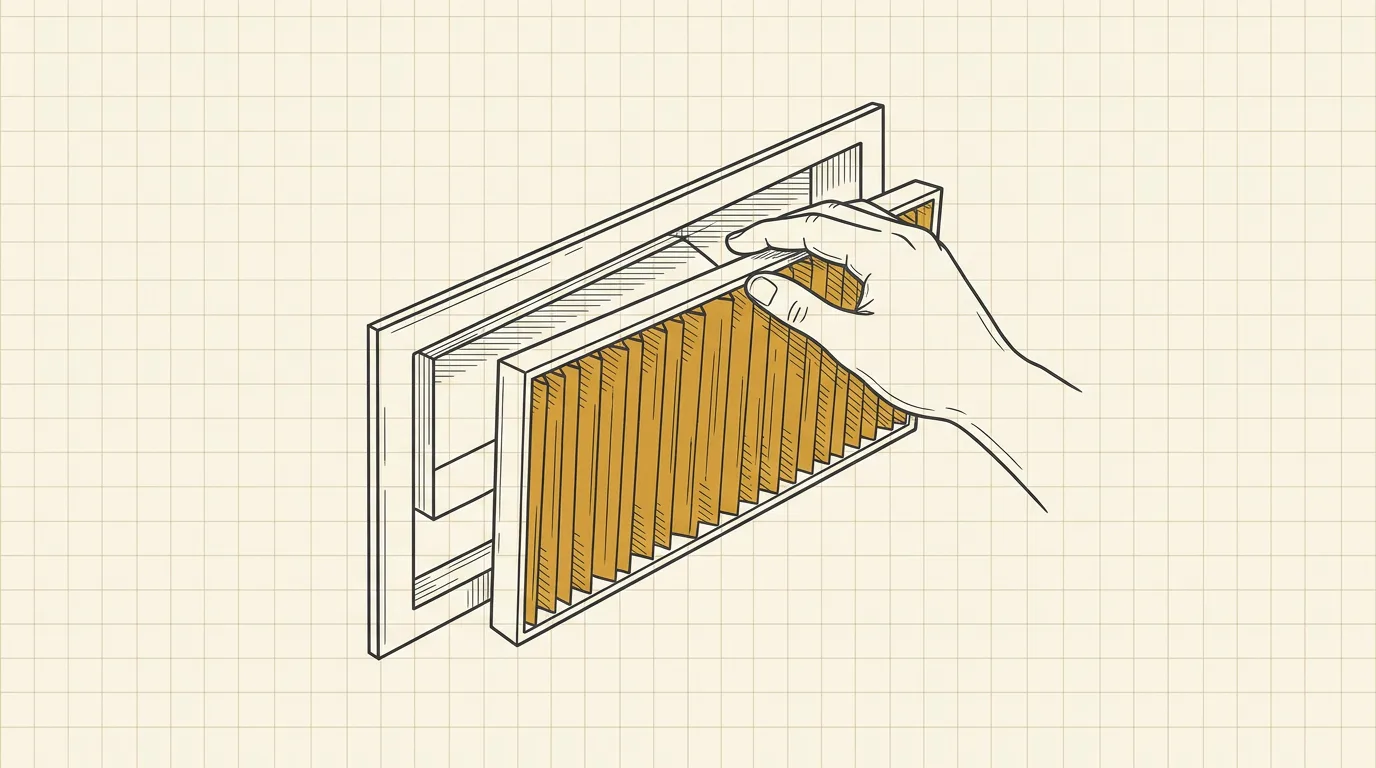
Check price on Amazon As an Amazon Associate we earn from qualifying purchases. Price & availability shown on Amazon.com.- Slide the old filter out and read the size printed on its frame — that’s the nominal size to order.
- Measure the slot anyway with a tape: width, height, and depth. If the old filter’s label is gone or illegible, the slot measurements are the truth.
- Check the depth tolerance. A 0.75-inch-thick filter in a slot cut for exactly 1 inch is fine; a 1-inch-deep filter forced into a 0.75-inch slot is not.
- Note the airflow arrow on the old filter’s frame before it comes out — the new one goes in the same direction (arrow points toward the blower).
If your slot takes a 4- or 5-inch-deep media cabinet, none of the 1-inch filters on this page are your product — deep-media cabinets hold far more surface area and are a different (better, pricier) conversation.
Head-to-Head
| Aerostar MERV 11 6-pack | Aerostar MERV 13 6-pack | |
|---|---|---|
| Price at time of writing | ||
| With Subscribe & Save | ~$8.83–9.35/filter | ~$7.37–7.80/filter |
| Rating (at time of writing) | 4.7 stars, 2,200+ ratings | 4.5 stars, 3,000+ ratings |
| Capture tier | Fine dust, dander, smoke particles (1–3 µm focus) | Adds finer/smaller particle capture |
| Airflow resistance | Moderate | Higher — check system tolerance |
| Actual size | 19.75 x 24.75 x 0.75 in | 19.75 x 24.75 x 0.75 in |
| Seller | Amazon.com | Amazon.com |
The Math: What a Year of Filters Actually Costs
Assumptions: one 20x25x1 slot, replaced every 75 days (midpoint of the 60–90 day rule), national average electricity of 18.34¢/kWh for the blower-energy side,[2] and average household use of 899 kWh/month for scale.[3]
- Filter cost, MERV 11: $62.34 ÷ 6 = $10.39/filter. A year is 365 ÷ 75 ≈ 4.9 filters, so 4.9 × $10.39 ≈ $51/year. On Subscribe & Save at ~$8.83/filter: 4.9 × $8.83 ≈ $43/year.
- Filter cost, MERV 13 (at the checked price): $51.99 ÷ 6 = $8.67/filter → 4.9 × $8.67 ≈ $42/year — about $9/year less than MERV 11 at list, purely because of the price rotation.
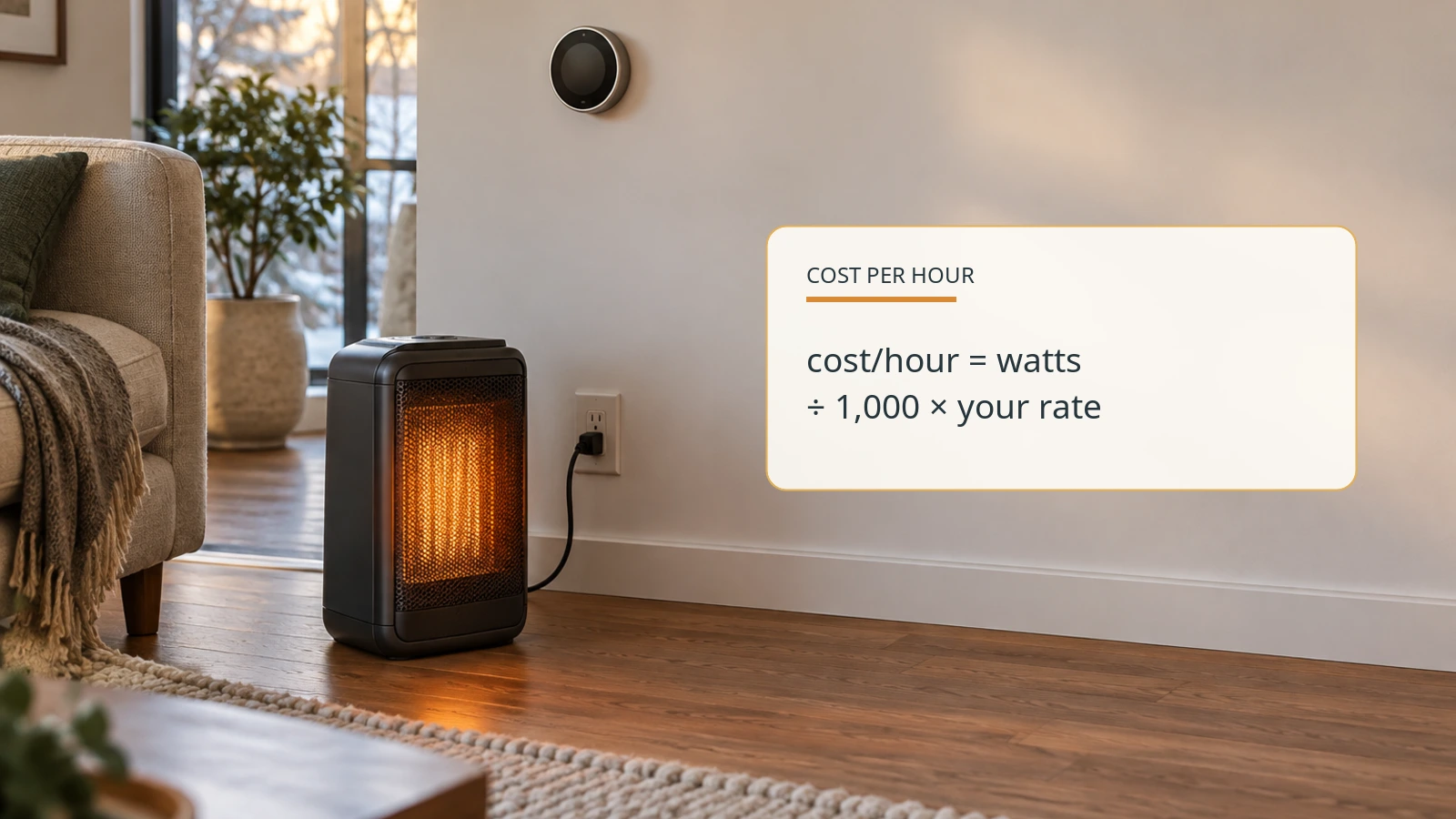
- The hidden cost of over-filtering: a blower moving air through a clogged or too-dense filter draws measurably more power. If higher resistance adds even 20 W of average blower draw over 1,000 run-hours/year, that is 20 W × 1,000 h = 20 kWh × $0.1834 ≈ $3.67/year — small, but it compounds with longer run times, and it is the reason the manual check comes before the checkout.
The honest summary: filter money is small money. The reason to choose carefully is airflow, not dollars.
Which Should You Actually Buy?
- Manual says MERV 13 or higher is fine, or an HVAC tech approved it → the MERV 13 6-pack, especially while it’s the cheaper of the two.
- Older furnace, marginal blower, or manual is vague → the MERV 11 6-pack; it’s the safer default and the community consensus for a reason.
- Allergies, pets, or wildfire smoke in your region and your system can take it → MERV 13, with more frequent replacement checks (a loaded high-MERV filter chokes airflow faster).
- Your system runs constantly regardless of filter → the filter isn’t your problem; check duct leaks and other reasons HVAC runs all day, and if it flips on and off rapidly, these short-cycling causes — a denser filter can even contribute to short cycling in marginal systems.
And the standing rule that outranks every pick on this page: measure the slot, read the manual, then buy. The best filter is the correct size at the highest MERV your specific blower tolerates — and the cheapest failure is a $10 filter that doesn’t fit, while the expensive one is a system strangled by media it was never designed for.
Sources
- EPA — Guide to Air Cleaners in the Home — guidance to select MERV 13 “or as high a rating as your system fan and filter slot can accommodate,” and that all filters need regular replacement. Retrieved 2026-09-11.
- EIA Electricity Monthly Update — End-Use Consumption — average residential price 18.34¢/kWh, June 2026. Retrieved 2026-09-11.
- EIA — How much electricity does an American home use? — 899 kWh/month. Retrieved 2026-09-11.
- Amazon — Aerostar MERV 11 20x25x1, 6-Pack (B01CR9JMV4) — $62.34 ($10.39/count), 4.7 stars / 2,217 ratings, actual size 19.75 x 24.75 x 0.75 in, sold and shipped by Amazon.com, Subscribe & Save tiers. Retrieved 2026-09-11.
- Amazon — Aerostar MERV 13 20x25x1, 6-Pack (B01CR9JLDI) — $51.99 ($8.67/count), 4.5 stars / 3,095 ratings, MPR 1500, sold and shipped by Amazon.com. Retrieved 2026-09-11.