Quick Answer
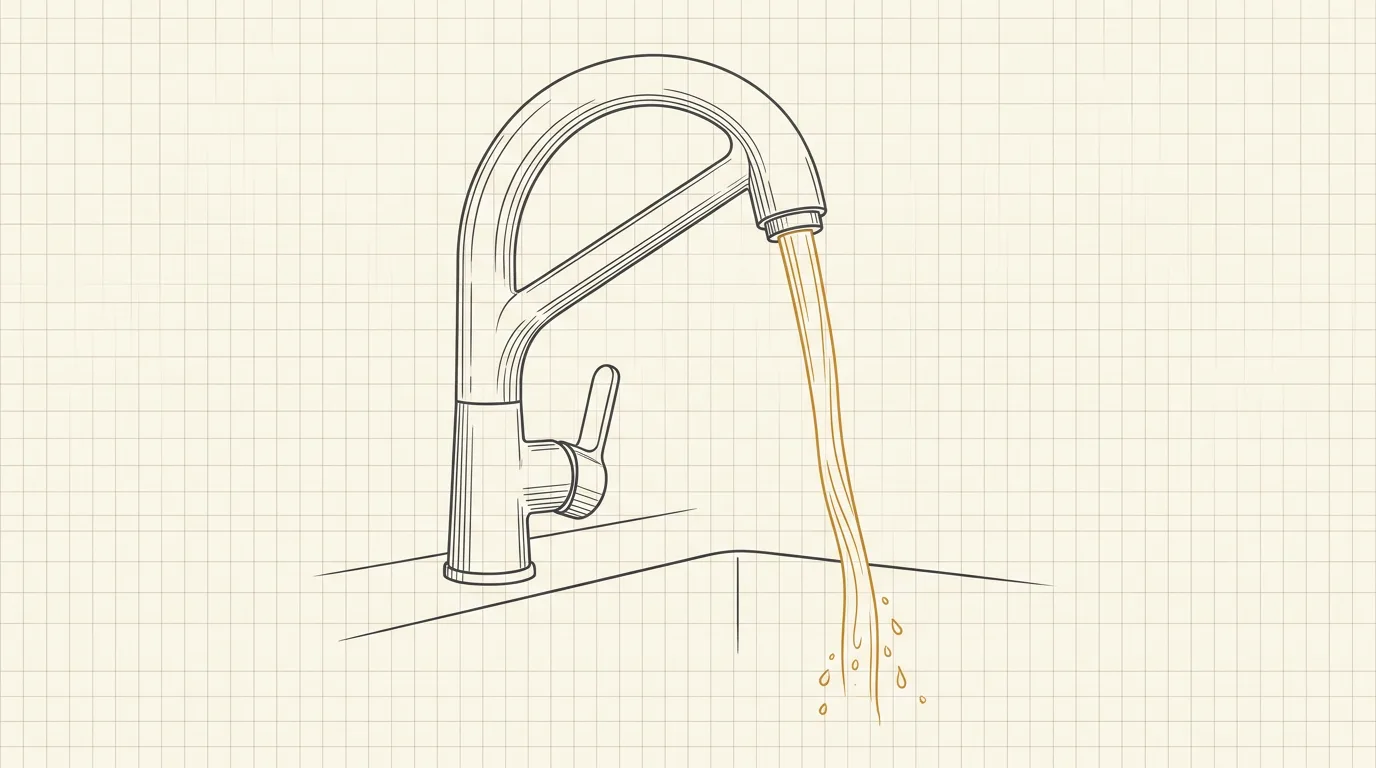
The Niagara Tri-Max is the best faucet aerator for cutting your water bill, because it is the rare aerator with an adjustable GPM dial — and that dial is the entire point. For about $8.50 you get three spray settings (0.5, 1.0, and 1.5 GPM) on a part you screw onto an existing faucet in about thirty seconds, with no tools. Most aerators lock you into one flow forever; the Tri-Max lets you run 1.5 GPM for the sink you actually use and drop to 0.5 GPM for tasks where a trickle is plenty. The honest runner-up is the Niagara Dual-Spray Swivel for the kitchen (about $9) — it carries a lower 3.7-star rating, and we are not going to hide that, because its real job is swivel reach, not raw water savings. If the biggest line on your bill is water, start here: a few dollars of aerator out-saves almost anything else you can bolt onto a fixture. For the full picture on why your bill looks the way it does, start with how to lower your water bill and what a CCF is on your water bill. The direct buy for the pick is the Niagara Tri-Max adjustable aerator on Amazon.
First, What a Faucet Aerator Actually Is
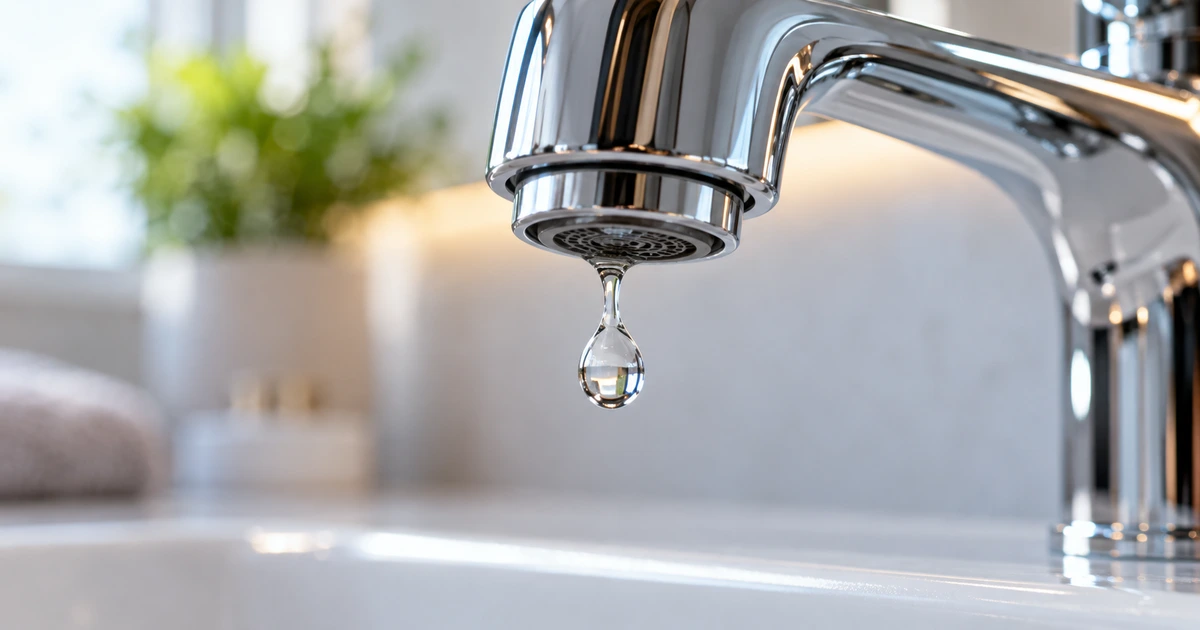
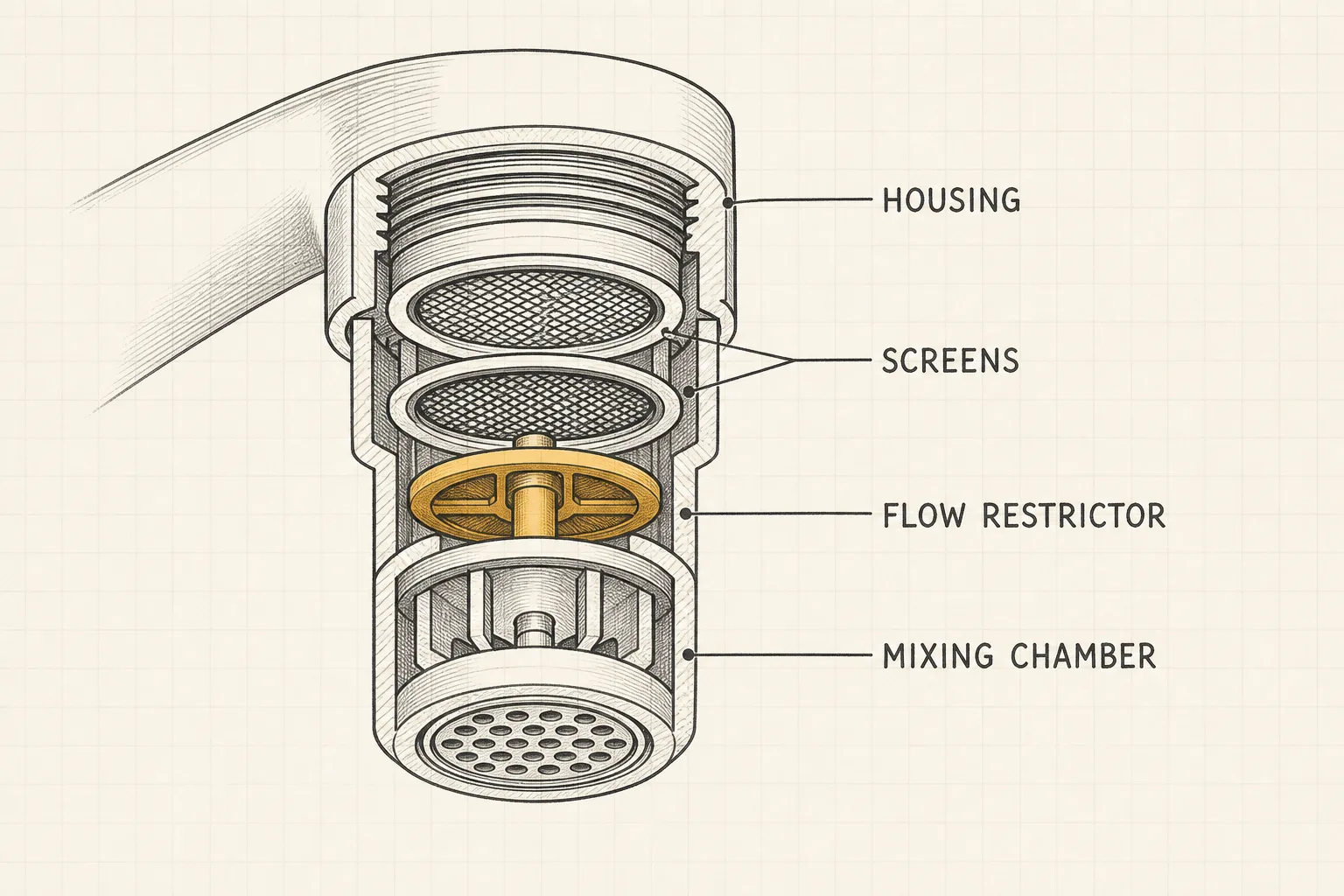
An aerator is the little mesh-and-baffle cartridge screwed into the tip of your faucet spout. Its original job is to mix air into the water stream — that is why a modern faucet pours a smooth, bead-free column instead of a chaotic splash — but that same air does something useful for your bill: it means the faucet delivers a satisfying stream at a much lower actual gallon-per-minute (GPM) flow than the bare pipe would.
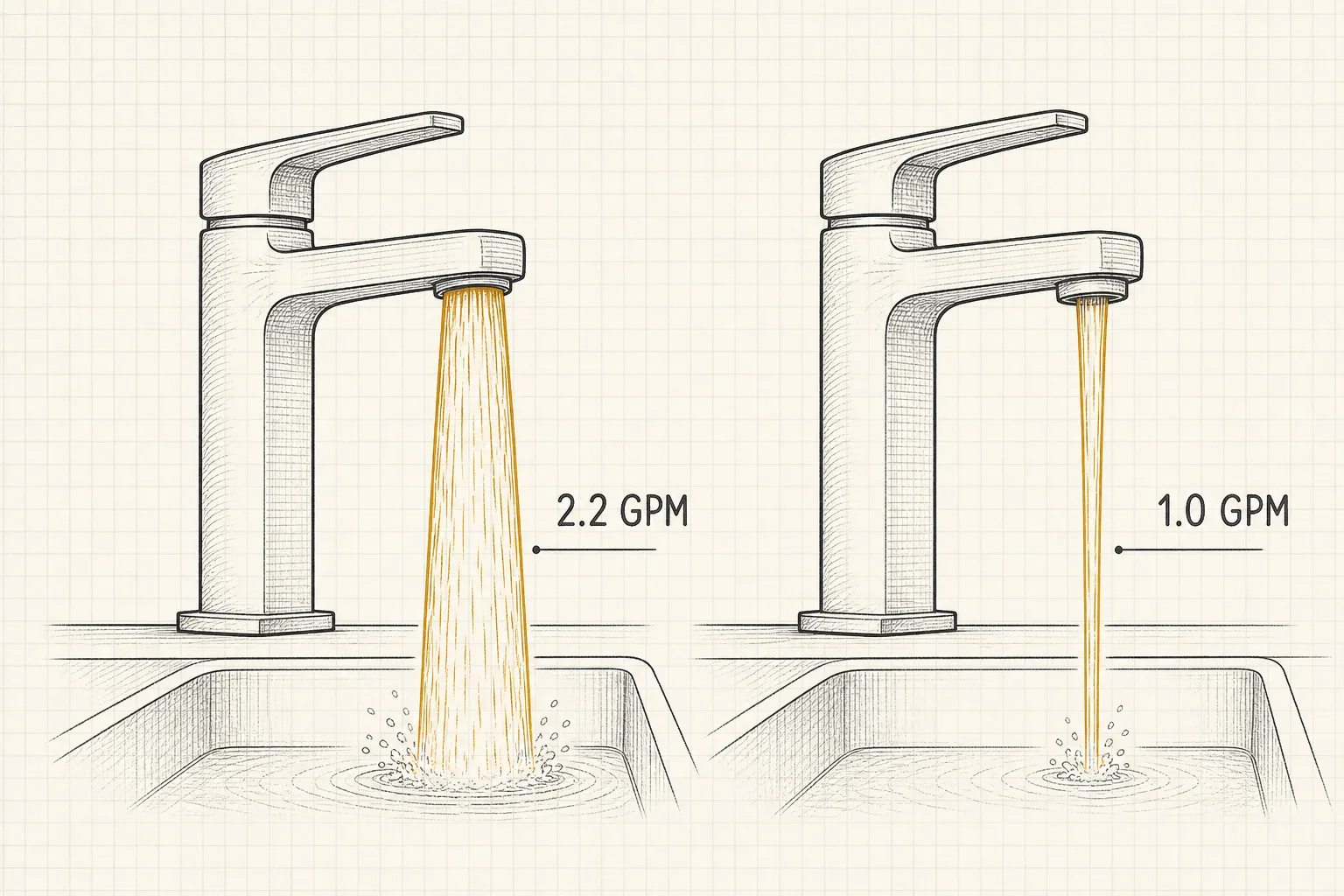
Here is the part that matters for savings: the federal plumbing standard caps bathroom faucets at 2.2 gallons per minute, and most faucets you grew up with run right at that number even when you do not need the full blast.[1] Brushing your teeth, rinsing your hands, shaving, filling a glass — none of those need 2.2 GPM, yet the faucet happily pours it every second the tap is open. A WaterSense-labeled faucet or aerator cuts that to 1.5 GPM or less — a 30% or better reduction from the standard 2.2 GPM — and EPA certified those aerators specifically so the flow still feels normal for handwashing and shaving.[1] Aerators that earn the WaterSense label are certified for both flow and performance, so you are not buying a dribble in exchange for a lower number.
What makes aerators the sleeper deal of the water world is not the percentage — it is the price and the effort. EPA notes a WaterSense aerator “can cost as little as a few dollars,"[1] and replacing one is a twist, not a plumbing project. That is the cheapest per-gallon-saved upgrade that exists. A water heater replacement is hundreds of dollars; a new toilet is a few hundred plus labor; an aerator is the price of a coffee and requires exactly one wrench you can borrow from a drawer.
What to Look For Before You Buy
Two specs decide whether an aerator will actually help you, and both are usually printed on the box or listing.
The GPM number. This is the flow at full open. Lower is more water-efficient but can feel weak if you actually fill pots from the tap. For a bathroom sink, 1.0–1.5 GPM is the sweet spot; for a kitchen where you fill tall pots and rinse big dishes, you want the flexibility to get more flow on demand rather than a permanent trickle.
Thread size and direction. Aerators come in a few thread standards (most commonly 15/16-inch for kitchen spouts and 55/64-inch for bathroom spouts), and some faucets use male threads where you might expect female. This is the single most common reason an aerator “doesn’t fit” — the adapter kit matters as much as the flow rate. A good listing either includes the adapter or tells you which standard the unit is built for.
The reason an adjustable aerator is worth hunting for is that it lets you escape the fixed-flow trade-off entirely. A fixed 1.0 GPM aerator is right for a bathroom but annoying in a kitchen; a fixed 1.5 GPM aerator saves less than it could in a bathroom. A dial solves both at once — and the Tri-Max below is the honest, well-reviewed way to get that dial without paying for it.
Three spray settings at 0.5, 1.0, and 1.5 GPM on one twist-dial aerator. Screws onto a standard bathroom faucet in about thirty seconds with no tools — run the flow you actually need per task instead of a fixed rate.
Check price on Amazon As an Amazon Associate we earn from qualifying purchases. Price & availability shown on Amazon.com.The Niagara Tri-Max — the Adjustable Pick
Best when: you want the dial — different flows for different tasks, all in one faucet tip.
The Niagara Tri-Max is a bathroom aerator with three selectable spray settings at 0.5, 1.0, and 1.5 GPM, all behind a twist collar on the same unit. That spread is the feature. You can run the sink at 1.5 GPM for a normal wash, drop it to 1.0 for the daily brush-and-rinse, and hit 0.5 for the tasks where you mostly need water to wet a sponge. At the time of writing it carries roughly 4.2 stars from 1,600+ reviews and sells for about $8.50, with Prime shipping, and the price band is stable enough that the box below is the live number.
We are not going to pretend the low setting is a fire hose — 0.5 GPM is a deliberate trickle, and it is meant for the moments where a trickle genuinely is enough. That is the whole honest case for an adjustable unit: you are not forced to live at the lowest number all day; you dial it down when it costs you nothing to do so.
Three spray settings at 0.5, 1.0, and 1.5 GPM on one twist-dial aerator. Screws onto a standard bathroom faucet in about thirty seconds with no tools — run the flow you actually need per task instead of a fixed rate.
Check price on Amazon Price & availability shown on Amazon.com — we may earn a commission.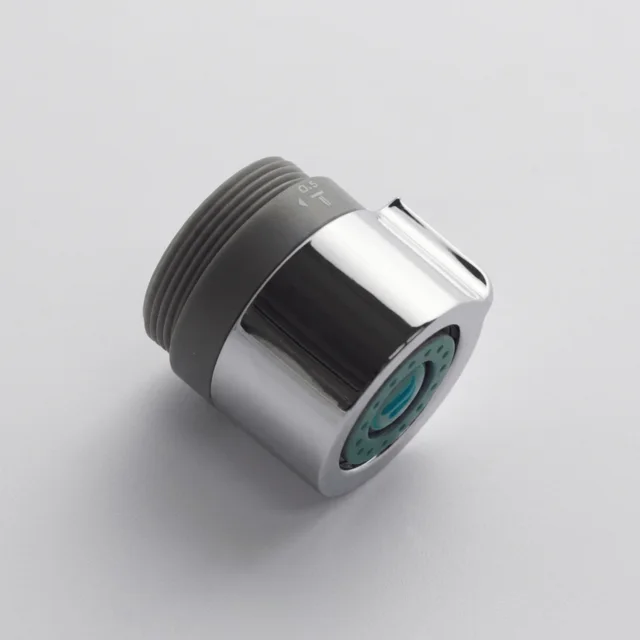
The Niagara Dual-Spray Swivel — the Kitchen Runner-Up (and Its Honest Rating)
Best when: the sink is a kitchen sink, and reach or spray power matters more than the lowest possible flow.
For a kitchen, the honest priority is different. You are not brushing your teeth; you are filling pots and rinsing produce and scrubbing dishes, and a fixed trickle would make you miserable. That is where the Niagara Dual-Spray Swivel earns its place: about $9, a 3.7-star rating from 800+ reviews at the time of writing, Prime-eligible, and built around a swiveling head that reaches across a deep sink basin instead of a fixed vertical stream.
We are calling out the 3.7 stars directly because the rating is the honest tell. A lower-starred aerator usually means a segment of buyers hit a fit or finish quirk — often the thread-adapter mismatch we flagged above — rather than a fundamental flow failure. That is exactly why we recommend it as the kitchen runner-up and not a universal pick: buy it for the swivel and reach, understand the lower satisfaction signal, and use the box’s listing to confirm your thread before you commit. If your kitchen faucet is a standard spout and you would rather have the dial than the swivel, the Tri-Max works there too — this one is for the people who genuinely need the reach.
Swiveling aerator with a dual spray pattern for reaching across a deep kitchen basin and rinsing dishes or produce. Sells for about $9 and is Prime-eligible; the lower star rating is a known trade-off we flag honestly.
Check price on Amazon As an Amazon Associate we earn from qualifying purchases. Price & availability shown on Amazon.com.Swiveling aerator with a dual spray pattern for reaching across a deep kitchen basin and rinsing dishes or produce. Sells for about $9 and is Prime-eligible; the lower star rating is a known trade-off we flag honestly.
Check price on Amazon Price & availability shown on Amazon.com — we may earn a commission.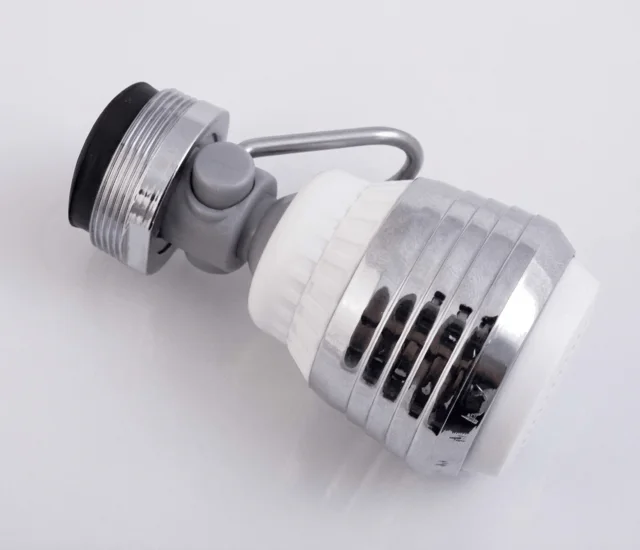
Head-to-Head
| Niagara Tri-Max | Niagara Dual-Spray Swivel | Typical fixed 1.5 GPM aerator | |
|---|---|---|---|
| Typical price | ~$8.50 | ~$9 | $3–8 |
| Flow | 0.5 / 1.0 / 1.5 GPM (dial) | Dual spray, higher flow | Fixed 1.5 GPM |
| Best room | Bathroom (or any sink) | Kitchen | Any single-task sink |
| Ratings (time of writing) | ~4.2★ / 1,600+ | ~3.7★ / 800+ | Varies |
| The honest trade-off | Low setting is a trickle by design | Lower star signal, fit quirks | No way to adjust flow |
The Math: What 2.2 GPM Down to 1.0 GPM Is Actually Worth
Let us put real numbers on it, with the assumptions stated up front so you can redo it for your own house. We will use a combined water-plus-sewer rate of roughly $0.01 per gallon (about $10 per 1,000 gallons), which is a common national average when you fold sewer charges in with water — EPA’s figures put a typical family-of-four water and sewer spend around $1,000 a year, which works out to that same ballpark per gallon. Your utility’s tiered rate may differ; that is exactly why tiered water rates are worth a read first.
Start with one bathroom faucet. Assume a household uses that sink for about 4 minutes a day combined (handwashing, teeth, shaving) across everyone:
- Old flow: 2.2 GPM × 4 min = 8.8 gallons/day
- Tri-Max at 1.0 GPM: 1.0 GPM × 4 min = 4.0 gallons/day
- Saved per faucet: 8.8 − 4.0 = 4.8 gallons/day
- Per year: 4.8 × 365 = 1,752 gallons/year
- In dollars: 1,752 × $0.01 = ~$17.50/year for one bathroom faucet
Now scale it to a normal house. Two bathroom sinks plus a kitchen sink, each cut by roughly the same proportion:
- 3 faucets × 1,752 gallons ≈ 5,256 gallons/year
- At $0.01/gal: ~$52/year, for about $17–26 of aerators (two Tri-Maxes and the kitchen swivel)
Payback lands in about four months, and the units themselves are near-indestructible — aerators are not a consumable you replace annually. EPA’s own national figure is more conservative (the average family saves about 700 gallons/year from swapping to a standard WaterSense-labeled faucet or aerator),[1] and that is the right anchor for a typical 1.5 GPM swap. The 1.0 GPM dial on the Tri-Max does better than that because it lets you actually live at the lower flow. For context on how those gallons sit against the rest of the house, average water use per person has the per-person breakdown.
Which Aerator Should You Actually Buy?
- Bathroom sink, want the biggest bill cut with a dial → Niagara Tri-Max. ~$8.50, the adjustable GPM dial is the feature.
- Kitchen sink, need reach and spray → Niagara Dual-Spray Swivel, knowing the 3.7-star signal is real and the payoff is ergonomics more than max savings.
- Renter, or want the absolute cheapest start → any WaterSense-labeled fixed 1.5 GPM aerator you can confirm fits your thread; the label means certified flow and performance.
- Just want the concept before buying → read how to lower your water bill first, then come back.
And the standing rule for every aerator on this page: an aerator does not save anything until the water is running. It reduces the flow the moment the tap opens, but the biggest, cheapest savings still come from the habits around it — turning the tap off while you brush (EPA estimates that alone can save as much as 3,000 gallons a year)[1] and not running a full blast when a trickle does the job. An aerator is a force multiplier on those habits, not a replacement for them. Buy the dial if you want the control; build the habit if you want the whole number.
Sources
- EPA WaterSense — Bathroom Faucets — standard 2.2 GPM, WaterSense ≤1.5 GPM, ~700 gal/yr average-family savings, aerators cost “as little as a few dollars.” Retrieved 2026-09-11.
- EPA WaterSense — Showerheads — standard 2.5 GPM, WaterSense ≤2.0 GPM, ~2,700 gal/yr average-family savings. Retrieved 2026-09-11.
- EPA WaterSense — Residential Toilets — toilets ~30% of indoor water, 1.6/1.28 gpf standard. Retrieved 2026-09-11.
- Wirecutter — The Best Showerhead — context on how the industry has moved toward 1.75 gpm heads. Retrieved 2026-09-11.
- EIA — How much electricity does an American home use? — context anchor for household usage figures. Retrieved 2026-09-11.