Quick Answer
The best draft stopper is the one that matches where your air is escaping: a fabric slide-on sleeve for the under-door gap (renters, interior doors, ten dollars), an adhesive door sweep for exterior doors (permanent, seals tighter), V-strip weatherstripping for the sides and top of the frame (the gap most people never check), and a threshold adjustment or seal when the gap is too big for any sweep. Before buying anything, do the two-minute test from how to find and seal drafts in your home — incense stick or wet hand around the door on a windy day — because the under-door gap gets all the attention while the frame edges and threshold often leak more.
This page is the purchase companion to that diagnostic: what each type honestly does, what it can’t do, and the two picks worth buying.
Step Zero: Find the Actual Gap
Draft-stopper purchases fail for one reason: people buy for the gap they assume, not the gap they have. On a windy or cold day:
- The frame test: slowly move an incense stick (or a wet back of your hand) around the door CLOSED into its frame — top, hinge side, latch side, and across the bottom. Smoke wavering or skin feeling cold = air moving.
- The gap measurement: with the door closed, measure the under-door gap (a coin stack works as a ruler: quarter ≈ 1.75mm, two quarters ≈ 3.5mm). Fabric sleeves handle up to about 1.5 inches; adhesive sweeps need roughly 0.2-0.9 inches of clearance to stick and flex; bigger gaps at exterior doors point to threshold adjustment instead.
- The daylight check: if you can see daylight under or around the closed door at night with the porch light on, you have found at least one live gap.
Envelope leaks like these are ranked among the cheapest heating savings that exist — the broader math of where winters bills come from is in why is my heating bill so high, and every degree of draft you remove makes the same thermostat strategy work better.
Type 1: Fabric Slide-On Sleeves (The Renter’s Default)
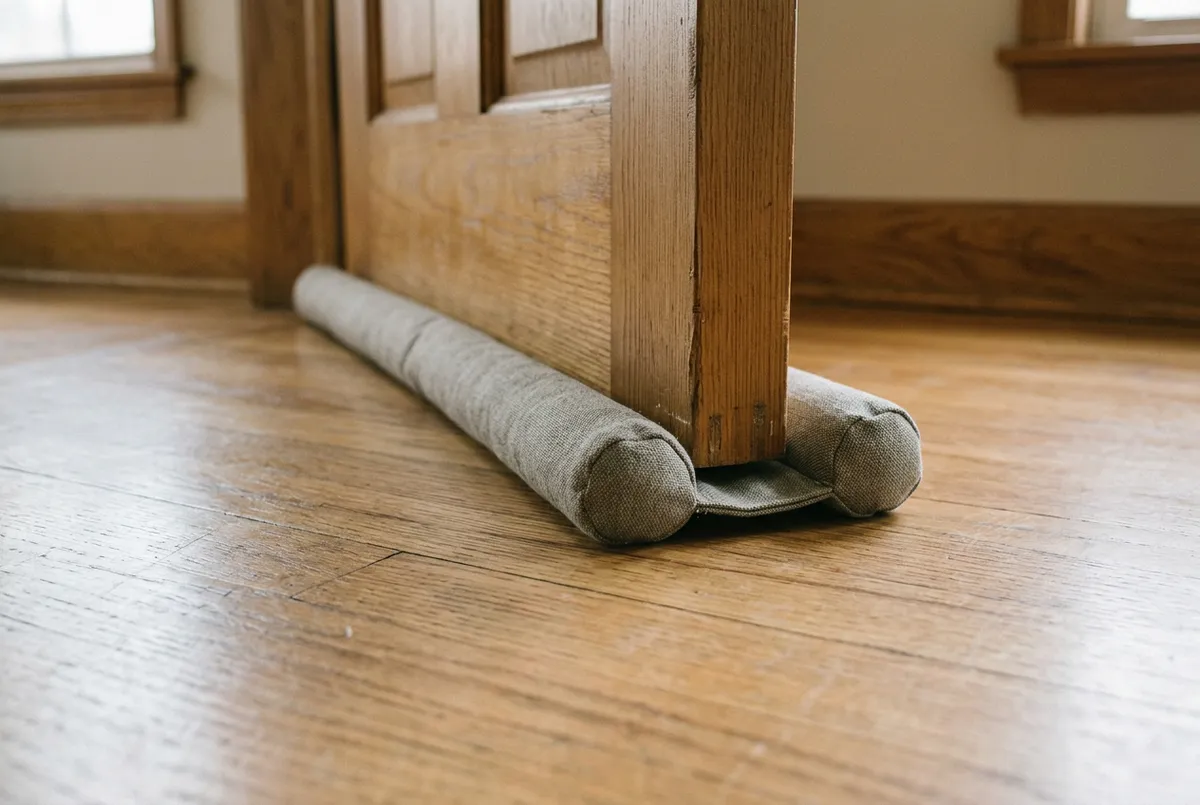
A double-sided fabric tube that slides under the door and moves with it — foam rods cut to length inside a washable sleeve. What they honestly are:
- Best for: interior doors, bedroom doors, apartment doors, rentals — anywhere you can’t or shouldn’t attach hardware. Also the classic fix for the door nobody wants to modify.
- Strengths: installs in five minutes with scissors, moves with the door, doubles as a sound blocker, ten-dollar fix, zero damage.
- Honest limits: it’s a fabric tube on the floor — it slows the air, it doesn’t seal it the way an adhered sweep does; expect dust tolerance, occasional re-centering, and replacement every few seasons. And it only touches the bottom edge: if your frame leaks, no sleeve fixes that.
Double-sided fabric sleeve with cut-to-length foam rods — slides under the door and moves with it. Fits standard doors up to 38 inches and covers gaps up to about 1.4 inches. The honest pitch: it's the fastest, least-destructive draft fix there is, it works on every flooring type, and it blocks noise as a bonus. Cut the foam to YOUR door width before inserting. 4.1 stars from 18,000+ ratings at the time of writing.
Double-sided fabric sleeve with cut-to-length foam rods — slides under the door and moves with it. Fits standard doors up to 38 inches and covers gaps up to about 1.4 inches. The honest pitch: it's the fastest, least-destructive draft fix there is, it works on every flooring type, and it blocks noise as a bonus. Cut the foam to YOUR door width before inserting. 4.1 stars from 18,000+ ratings at the time of writing.
Check price on Amazon As an Amazon Associate we earn from qualifying purchases. Price & availability shown on Amazon.com.Type 2: Adhesive Door Sweeps (The Exterior-Door Workhorse)
A strip — typically silicone or brush — that adheres to the door’s lower face and rides just above the threshold. This is the tighter seal and the right choice for exterior doors you own.
- Best for: front and back doors, garage-to-house doors, any door you can modify.
- Strengths: genuinely seals (adhered, continuous contact), survives years of door movement, invisible when the door is closed.
- Honest limits: installation quality is everything — the door surface must be cleaned and the sweep set at the height where it compresses slightly on the threshold without dragging (a sweep dragging on the floor peels itself off within weeks). Measure the door width and the gap BEFORE ordering; on uneven floors a single rigid sweep can’t follow the contour, and the fabric sleeve or a brush-type sweep handles skew better.
Industry-grade silicone sweep with a strong self-adhesive back — the tighter, more permanent seal for doors you own. Installs in under a minute: clean the door's lower face, peel, press, trim the excess. Silicone flexes over uneven thresholds better than rigid sweeps and doubles as a dust and noise barrier. Check the width and gap-size options at purchase to match your door. 4.4 stars from 25,000+ ratings at the time of writing.
Check price on Amazon Price & availability shown on Amazon.com — we may earn a commission.Type 3: Frame Weatherstripping (The Gap Nobody Buys For)
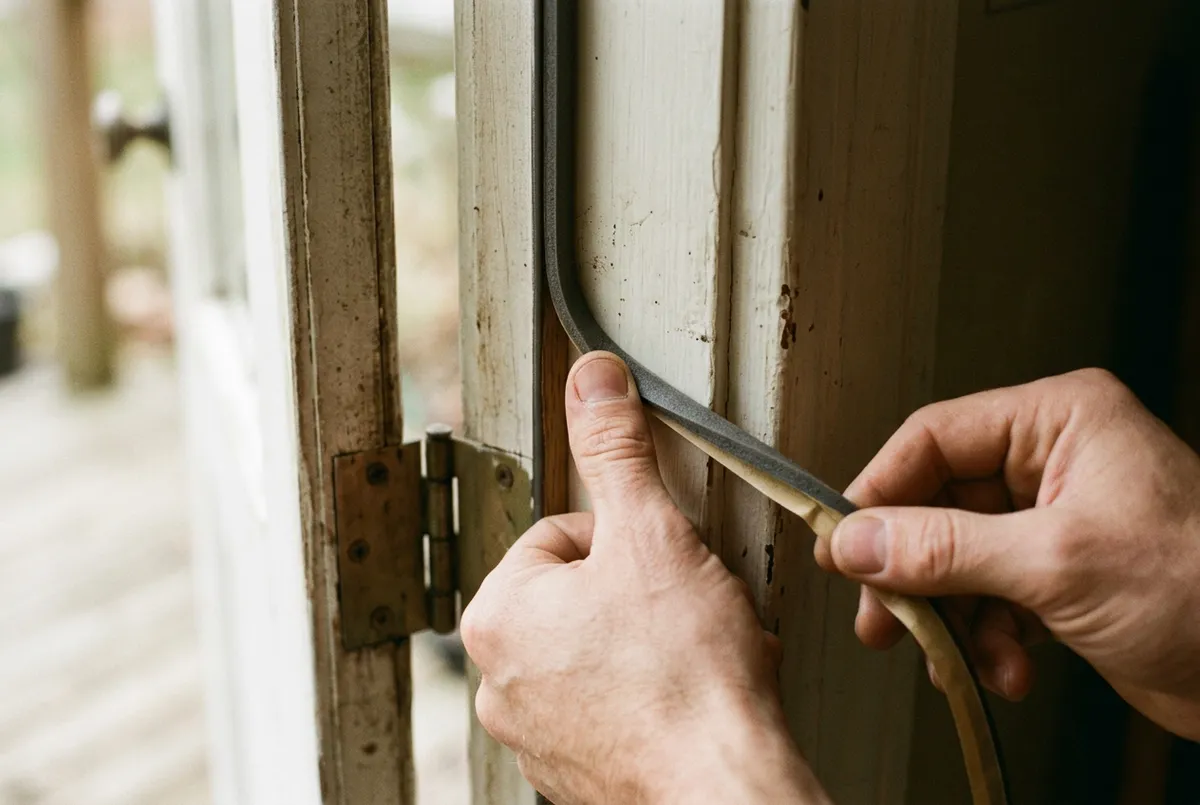
The edges of the door — where it meets the stops on the hinge side, latch side, and top — carry weatherstripping that compresses flat over years. Worn kerf-in compression strips and foam tapes are the invisible draft on most “I put a stopper under the door and it’s still cold” houses.
- What to buy: V-strip (V-shaped vinyl or metal that springs against the door) or kerf-in compression strips if your frame has the slot. Both are weekend-afternoon DIY: clean, peel/press or push into the kerf, and cut cleanly at corners.
- The interaction: sealing only the bottom while the frame leaks is like closing one window in a two-window room. The full-home version of this argument — measure, then seal the biggest leaks first — is the backbone of our draft-sealing guide, and the window-specific product decisions live in do window insulation kits pay off.
Type 4: Thresholds and Big Gaps
When the under-door gap exceeds what a sweep can bridge (roughly an inch-plus at an exterior door), the fix moves from the door to the threshold: adjustable thresholds (screws that raise a saddle to meet a worn sweep), threshold replacement, or a door-bottom shoe retrofit. This is hardware-store work, not Amazon-two-click work, and it’s worth doing right on exterior doors: the threshold gap faces wind-driven rain as well as air. Renters: a fabric sleeve plus a rolled towel is the honest ceiling of what you can do here; everything else wants the landlord.
The Honesty Section: What a Draft Stopper Can’t Do
- It will not re-seal your house. If the blower-door-scale leaks are in the attic hatch, the rim joist, or the duct system, the under-door sleeve is a comfort purchase, not a bill fix — the attic hatch alone can out-leak every door in the house.
- It will not substitute for the thermostat strategy. The savings stack is: seal the leaks, THEN run the winter thermostat schedule. Skipping step one makes step two’s math worse.
- Sweeps that drag break themselves. The most common adhesive-sweep failure is installation height — set where it compresses lightly, not where it scuffs. The most common fabric-sleeve failure is the wrong width; cut the foam to the door, not the package.
Decision Table
| Your situation | Buy | Why |
|---|---|---|
| Renter, interior/bedroom door | Fabric sleeve (MAXTID) | No adhesives on the lease, moves with the door |
| Own the front/back door | Adhesive sweep (Vellure-class silicone) + frame V-strip | Tightest practical seal; frame edges leak as much as the bottom |
| Daylight under an exterior door, 1"+ gap | Threshold adjustment/replacement | No sweep bridges it honestly |
| Whole house “still cold” after door fixes | The draft-sealing guide + window kits | The leaks moved, they didn’t disappear |
The Two-Minute Door Audit (Score as You Go)
Grade every exterior door and the worst interior doors on four checks — each is a yes/no, and any two failures make that door a project:
Industry-grade silicone sweep with a strong self-adhesive back — the tighter, more permanent seal for doors you own. Installs in under a minute: clean the door's lower face, peel, press, trim the excess. Silicone flexes over uneven thresholds better than rigid sweeps and doubles as a dust and noise barrier. Check the width and gap-size options at purchase to match your door. 4.4 stars from 25,000+ ratings at the time of writing.
Check price on Amazon As an Amazon Associate we earn from qualifying purchases. Price & availability shown on Amazon.com.| Check | Pass | Fail |
|---|---|---|
| Daylight (night, porch light on) | No light around the closed door | Any visible line of light = live gap |
| The paper pull (open the window slightly, close the door on a sheet of paper at the frame) | Firm resistance pulling it out | Slides free = no compression at that spot |
| Hand test on a windy day | No cold stripe along frame or threshold | Cold line marks the leak’s path |
| Threshold contact | Sweep/door touches lightly and evenly | Gap you can slide fingers under |
Two-minute total, no tools, and it tells you WHICH product each door needs: paper-pull failures at the frame say weatherstripping; daylight under the door says sweep or sleeve; cold at the threshold with a big gap says threshold work.
The Garage-To-House Door (The One Everybody Forgets)
The door between an attached garage and the house is an exterior door that gets treated like an interior one — and garages run 10-20°F colder than the house in winter, often unheated, sometimes with their own leaks to the outside. It deserves the FULL treatment: frame weatherstripping, a proper sweep, and — uniquely important here — a check of the door’s self-closer and bottom seal, because garage doors get propped, beaten by carried groceries, and adjusted by nobody. Cold garage air pushing through that door is a top-three draft source in homes with attached garages, and it’s invisible from the living side. (The garage itself, if heated: that’s a different envelope conversation — and if it’s NOT heated, don’t try to heat it for the sake of the connecting door; seal the door instead.)
Seasonal Maintenance (The Boring Part That Keeps Them Working)
- Adhesive sweeps: re-press the ends each fall — thermal cycling and door slam-peeling start at the corners. A wipe with alcohol before re-pressing restores grip for another season.
- Fabric sleeves: wash the cover when it gray-over; the foam rods compress over a season or two and cheap ones flatten permanently — a two-dollar bag of replacement foam revives the better covers.
- Frame weatherstripping: feel for the cold stripe each October (the hand test above). V-strip springs fatigue in high-traffic lanes after a few years; replacement is still minutes per side.
- Thresholds: sweep or vacuum the saddle groove — grit under a door sweep is both an airflow leak and sandpaper on the sweep’s bottom edge.
None of this is glamorous; all of it is why a ten-dollar draft fix keeps performing in year three instead of migrating to the junk drawer.
Frequently Asked Questions
Do door draft stoppers actually work?
What is the best draft stopper for a rental?
How do I measure for a door sweep?
Should I seal the door frame too, or just the bottom?
How much can sealing door drafts save on heating?
How long do draft stoppers last?
Related: how to find and seal drafts in your home, do window insulation kits pay off, and what temperature to set your thermostat in winter.