Quick Answer
A water heater blanket is worth it on an older, thin-walled tank in a cold space — and mostly not worth it on a modern factory-insulated tank. The honest verdict: if your tank is warm to the touch, a ~$33 blanket cuts standby loss and typically pays for itself in one to two winters; if your tank is already well-insulated (most tanks built in the last decade are), the blanket saves single-digit dollars a year and the payback stretches past the tank’s remaining life. The U.S. Department of Energy’s guidance is to insulate when your tank’s R-value is below roughly 24 — and most modern tanks already exceed that.[1] Our pick for the tanks that do need it is the Frost King SP57/11C, a 4.2-star, 2,200+ review blanket that fits standard 40–50 gallon tanks.
If you’re working through the whole bill, How to Lower Your Electric Bill: The Complete Guide is the master list this page slots into — and if your bill is gas-driven, Is Your Gas Bill Too High? covers the furnace side. If you just want the blanket: the Frost King is on Amazon.
First, What Standby Loss Actually Is
A tank water heater keeps 40–80 gallons of water hot around the clock, whether or not anyone uses it. The heat that escapes through the tank walls between uses is standby loss — the water heater’s version of a car idling in the driveway.
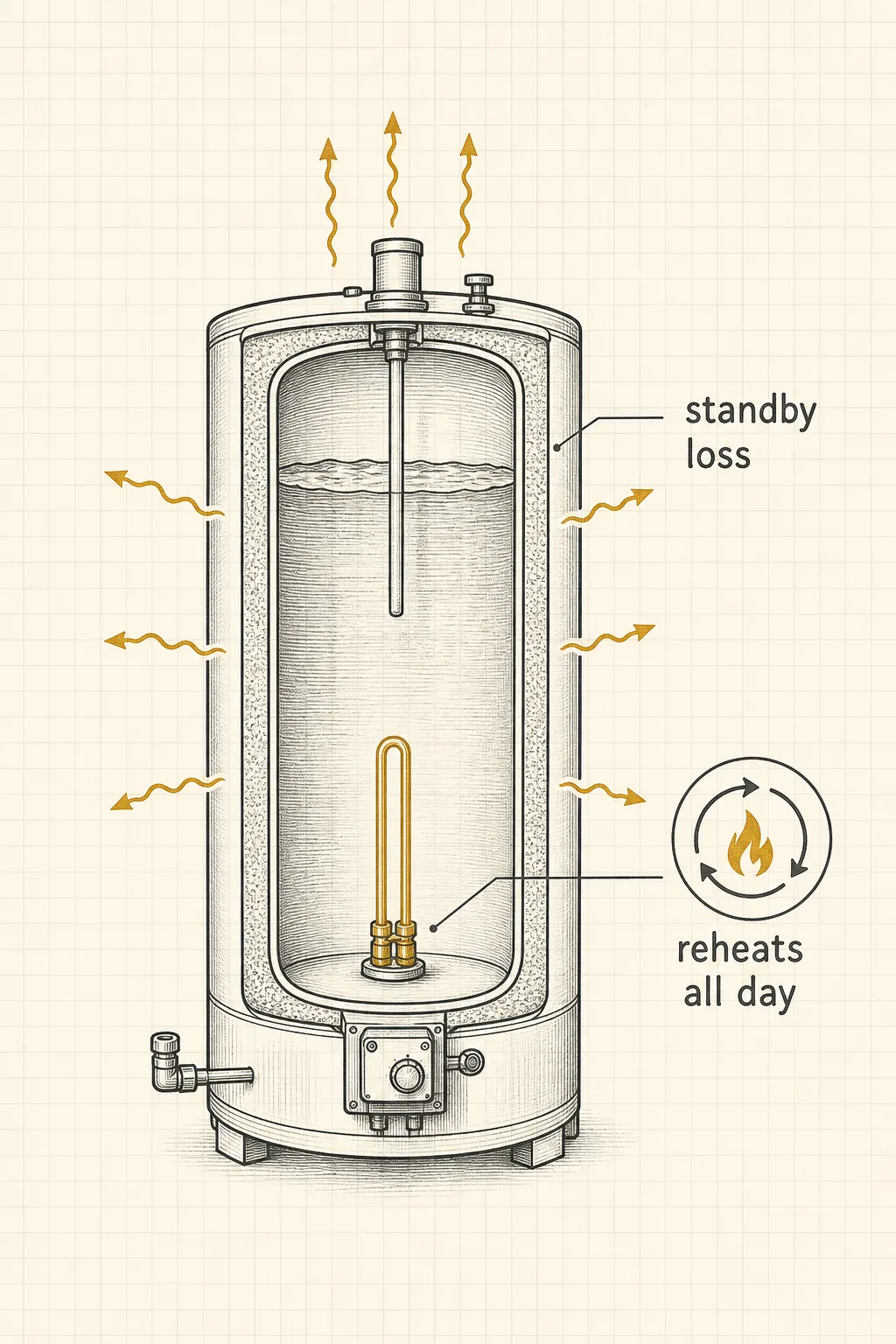
Standby loss is why the Department of Energy’s water-heating guidance treats insulation as a first-line efficiency measure: a tank that’s warm to the touch is a tank that’s actively losing heat, and the fix is either more insulation around it or a lower setpoint.[1] The two levers work on the same loss — a blanket and a 120°F setpoint both reduce how fast the stored water cools.
The key question is how much insulation your tank already has:
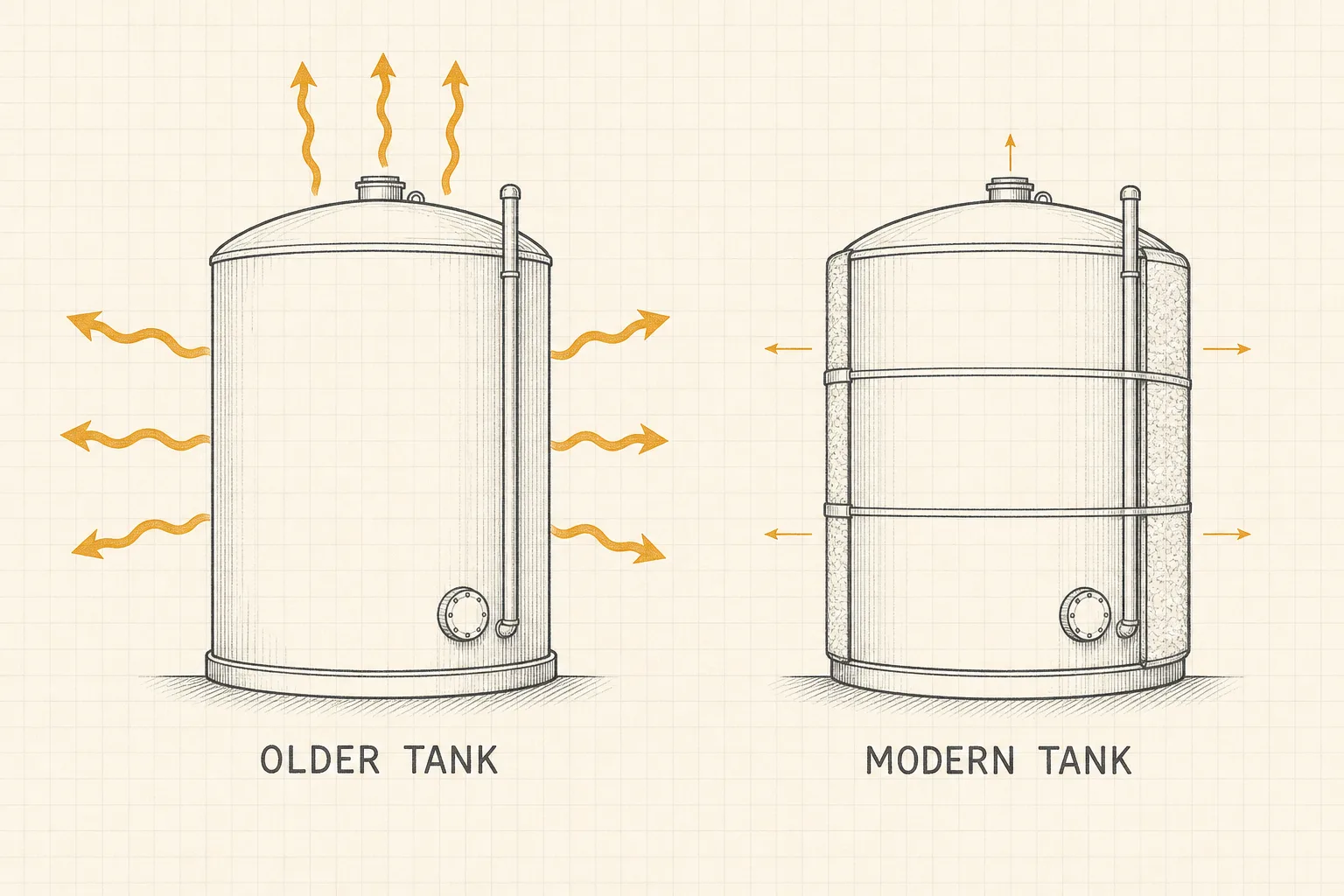
- Modern tanks (roughly the last decade) ship with factory foam insulation rated around R-16 or better — often R-24 or higher on ENERGY STAR models. The DOE’s threshold for adding a blanket is a tank R-value under about 24, which most new tanks clear.[1]
- Older tanks (10–20+ years) often have thin fiberglass or minimal factory foam — R-5 to R-12 territory — and are exactly the tanks that feel warm to the touch.
The Product: What We Picked
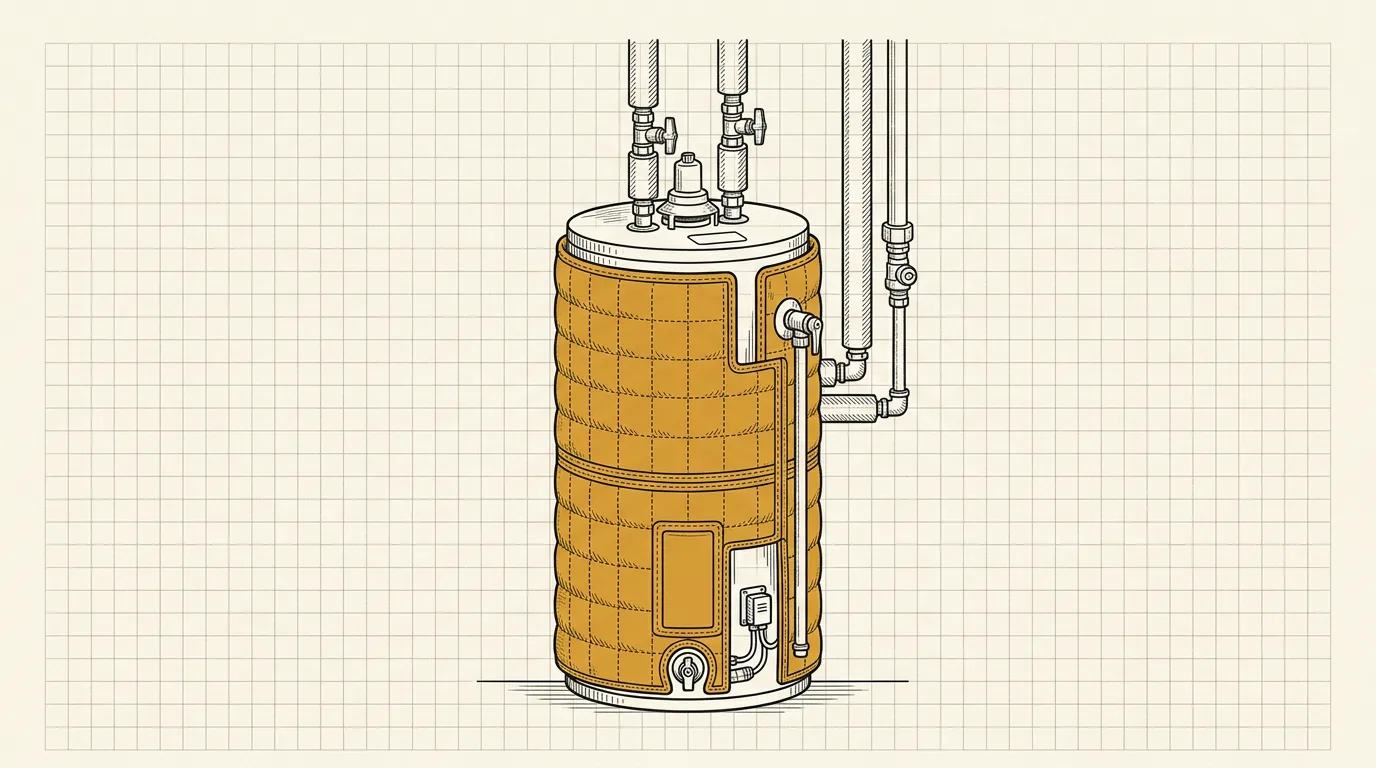
3-inch-thick, R-10 fiberglass blanket sized for standard 40–50 gallon tanks, with tape and fasteners included. 4.2 stars across 2,200+ reviews at the time of writing. Stock on the common size can run thin — check the box for your tank's dimensions before ordering.
Check price on Amazon Price & availability shown on Amazon.com — we may earn a commission.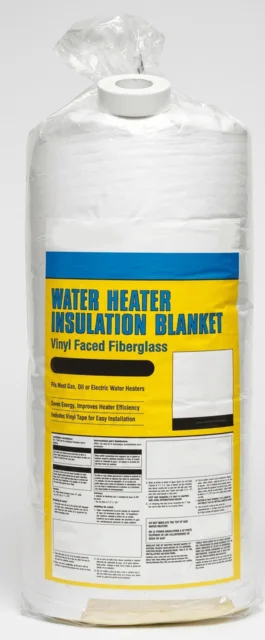
Best when: you have an older tank that’s warm to the touch, an electric tank in an unheated garage or basement, or a gas tank with no factory jacket. Those are the three situations where the blanket’s savings actually show up on the bill.
A sizing note that matters: blankets are sized to tank height and diameter, and the common 40–50 gallon size is the one that sells out first in fall. Measure your tank (the label on the side lists height and capacity) and check the box’s dimensions before you order — the Frost King’s 48 × 75-inch sheet wraps a standard tank, but a tall 50-gallon or a short 30-gallon needs the right variant.
3-inch-thick, R-10 fiberglass blanket sized for standard 40–50 gallon tanks, with tape and fasteners included. 4.2 stars across 2,200+ reviews at the time of writing. Stock on the common size can run thin — check the box for your tank's dimensions before ordering.
Check price on Amazon As an Amazon Associate we earn from qualifying purchases. Price & availability shown on Amazon.com.The install is genuinely DIY: unroll the blanket, wrap it around the tank, tape the seams, and cut around the thermostat, burner access panel, drain valve, and pressure relief valve so nothing is blocked. On a gas tank, the burner access panel and the flue must stay clear — a blanket over the combustion vent is a carbon-monoxide risk, not a savings. On an electric tank, the top access panel for the elements should be left reachable. The instructions on the box cover this; follow them, and if anything is ambiguous, a plumber’s hour is cheaper than a replacement tank.
The Three Tanks That Actually Need It
The blanket question splits cleanly by tank type and location:
- Older tanks (10+ years), thin factory foam — the textbook case. The tank feels warm to the touch because it’s losing heat through walls that were thin when the tank was built. This is where the $20–45/year band applies.
- Electric tanks in unheated garages and basements — even a modern tank loses more heat when the surrounding air is cold, because standby loss is driven by the temperature difference between the stored water and the room. A 50-gallon tank in a 40°F garage sheds heat much faster than the same tank in a 70°F closet, and the blanket narrows that gap.
- Gas tanks with no factory jacket — older gas tanks often shipped with minimal insulation around the jacket. Same rule: warm to the touch means it needs the blanket — installed carefully around the burner access, per above.
A tank that is not in the buy list: a modern, well-insulated tank in a conditioned space. It feels room-temperature, it already clears the DOE’s R-value threshold, and the blanket’s payback stretches past its remaining life.[1]
The Math: What It Actually Saves
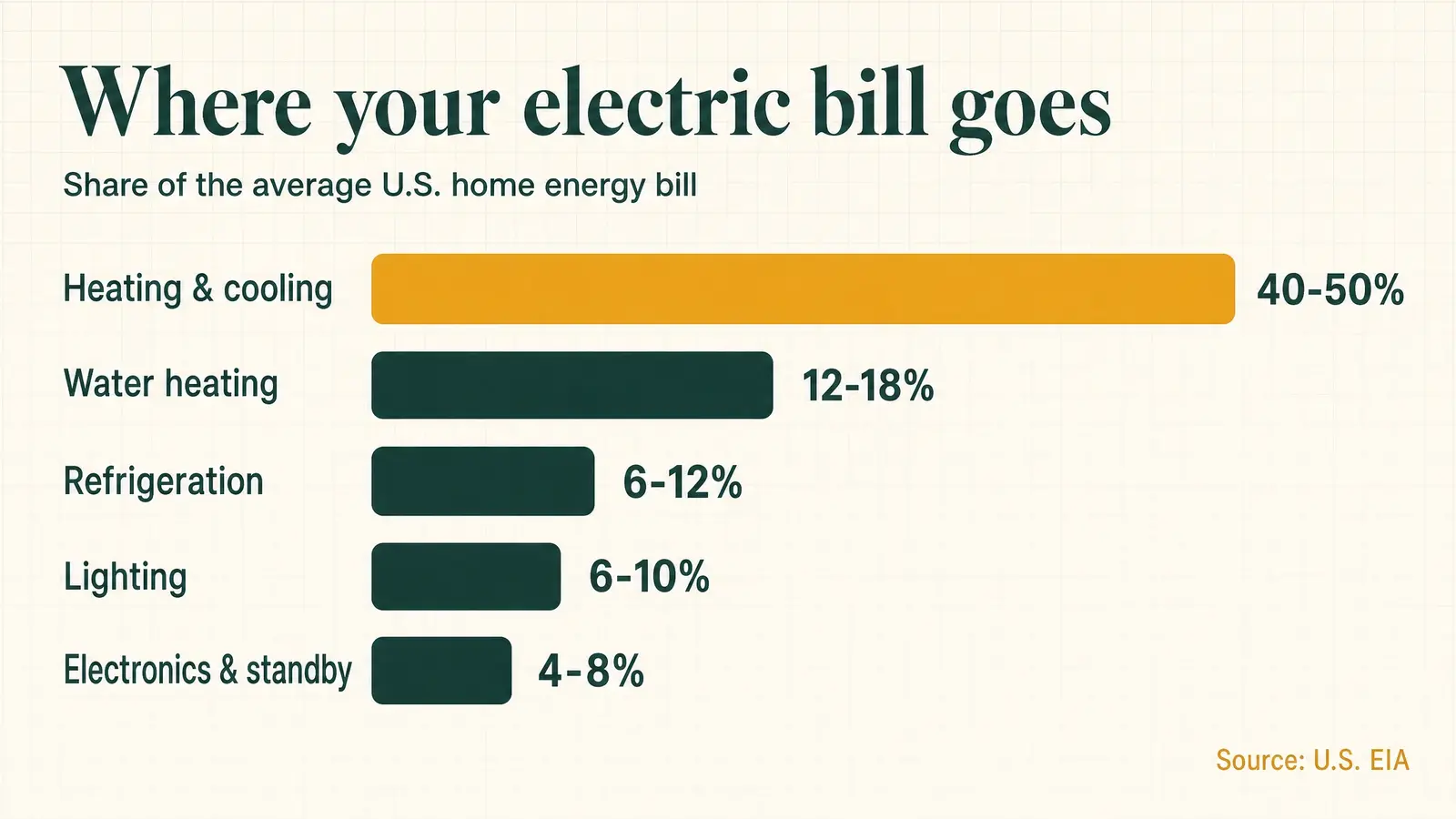
Here’s the honest arithmetic, with every assumption stated. National average residential electricity is 18.34¢/kWh (EIA, June 2026),[2] and the average household uses about 899 kWh/month.[3] Water heating is typically the second-largest home energy use — roughly 18% of a typical home’s energy, per DOE’s water-heating guidance.[1]
The savings range, honestly:
- DOE and ENERGY STAR guidance puts the standby-loss reduction from a blanket at roughly 4–9% of water-heating energy on tanks that need it.[1]
- A typical household spends about $400–600/year on water heating (electric at national average rates). Take the middle, $500/year:
- 4% savings = $20/year
- 9% savings = $45/year
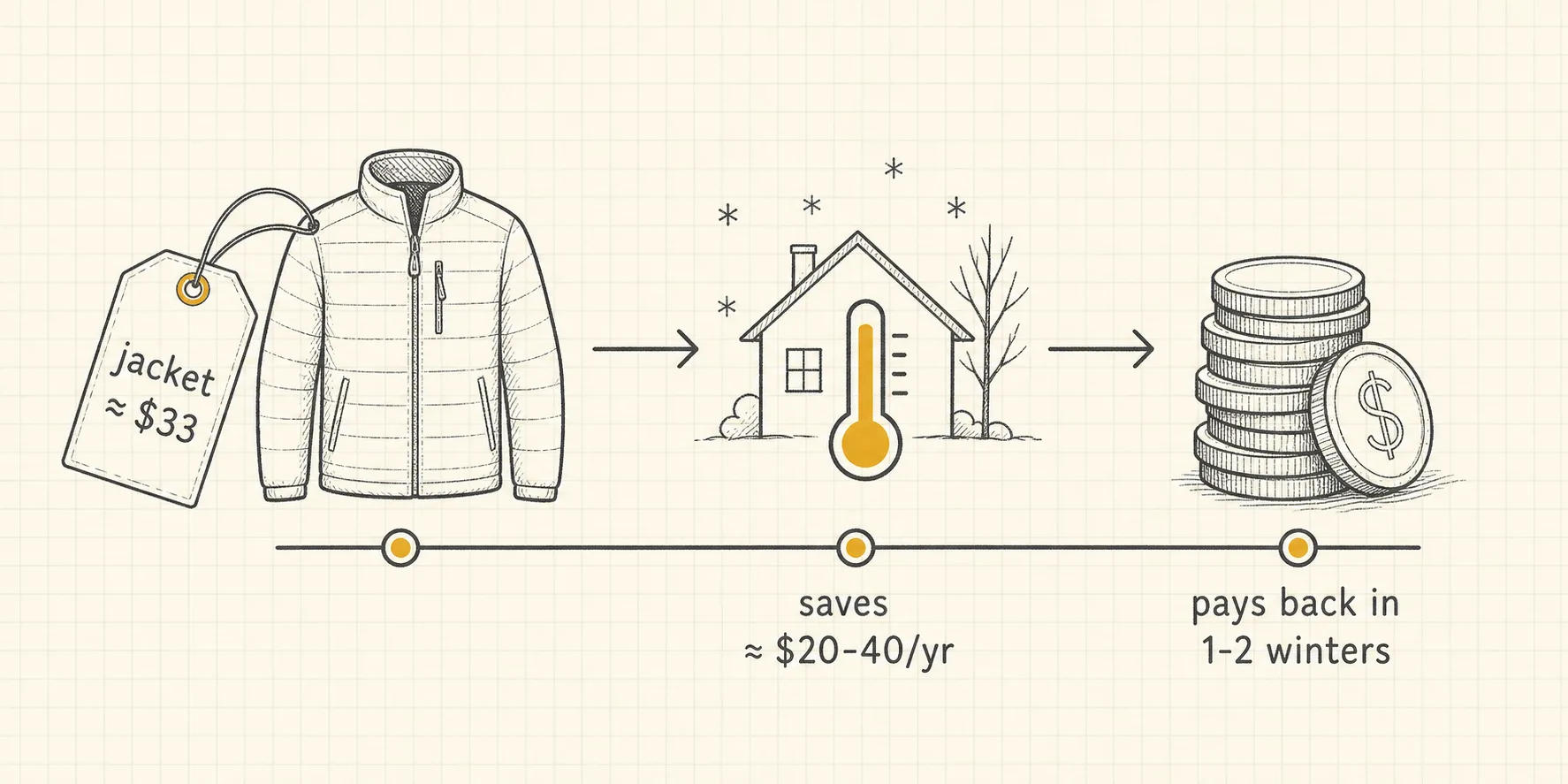
- So the honest band is $20–45/year on a tank that actually needs the blanket.
Payback on the ~$33 blanket:
- At $45/year: 33 ÷ 45 = ~0.7 years (about 8–9 months)
- At $20/year: 33 ÷ 20 = ~1.7 years (about 20 months)
So the honest payback is one to two winters — and that’s the whole verdict in one number.
And the case where it’s NOT worth it: on a modern R-16+ tank, the blanket adds maybe 1–3% on top of factory insulation — call it $5–15/year:
- At $15/year: 33 ÷ 15 = ~2.2 years
- At $5/year: 33 ÷ 5 = ~6.6 years
A 6-year payback on a tank that may only have 5 years left is not a purchase — it’s a donation. That’s why the honest answer is “it depends on the tank,” not “buy one.”
The gas-tank version of the math: if your water heater runs on natural gas, the savings scale with your gas rate rather than the electric rate. A typical household’s gas water-heating spend is lower than electric — often $250–400/year — so the blanket’s band becomes roughly $10–35/year:
- At $35/year: 33 ÷ 35 = ~0.9 years
- At $10/year: 33 ÷ 10 = ~3.3 years
Same verdict, slightly longer payback: worth it on an old warm tank, not on a modern one. The gas-bill angle is covered in Is Your Gas Bill Too High?, which treats the water heater as one of the top gas-waste suspects.
Head-to-Head: Blanket vs. the Alternatives
| Blanket (~$33) | Lower setpoint to 120°F (free) | Both | |
|---|---|---|---|
| Savings | $20–45/yr on old tanks | 4–22% of water-heating energy | Overlapping — not additive |
| Payback | 1–2 winters (old tank) | Instant | 1–2 winters |
| Best for | Old, warm-to-the-touch tanks | Every tank, always | Old tanks in cold spaces |
| Not for | Modern R-16+ tanks | Tanks needing 140°F (dishwasher, some medical) | — |
The honest note: the blanket and the setpoint act on the same standby loss, so their savings overlap — you don’t get to add them. Do the free setpoint first, then decide if the blanket is worth it on top.
Which Should You Actually Buy?
- Tank is warm to the touch, 10+ years old → yes, buy the blanket. $33 for $20–45/year is a 1–2 winter payback.
- Electric tank in an unheated garage or basement → yes, even on a newer tank — cold surroundings multiply standby loss.
- Gas tank with no factory jacket → yes, but keep the blanket clear of the burner access panel and flue per the instructions.
- Modern tank, R-16+, in a conditioned space → skip it. The savings don’t clear the payback horizon.
- Not sure? → the touch test is the honest shortcut: if the tank feels warm, it’s losing heat; if it feels room-temperature, the blanket has little to grab.
And the standing rule: insulation is a multiplier, not a substitute. A blanket on a tank set to 140°F saves less than a tank set to 120°F with no blanket — the setpoint is free and immediate. Do that first, then wrap the tank that still feels warm. And if your bill is high for reasons beyond the tank, the complete electric-bill guide and the gas-bill guide are where the rest of the savings live.
Sources
- U.S. Department of Energy — Water Heating — standby-loss framing, R-value guidance for tank insulation, water heating as ~18% of home energy use. Retrieved 2026-09-11. Archived copy: Wayback Machine, 2026-08-08.
- U.S. EIA — Electricity Monthly Update, End-Use Consumption — national average residential price 18.34¢/kWh, June 2026. Retrieved 2026-09-11.
- U.S. EIA — How much electricity does an American home use? — ~899 kWh/month average household use. Retrieved 2026-09-11.
- ENERGY STAR — Heat & Cool Efficiently — water heater insulation and setpoint guidance context. Retrieved 2026-09-11.