Quick Answer
Do not choose a portable space heater from a generic “best” list or expect a universal utility-bill saving. Every plug-in electric space heater converts essentially all the electricity it draws into heat—DOE states it plainly: “electric resistance heating is 100% energy efficient in the sense that all the incoming electric energy is converted to heat."[1] The real choices are safety certification, controls, and how the heat is delivered to the people in the room.
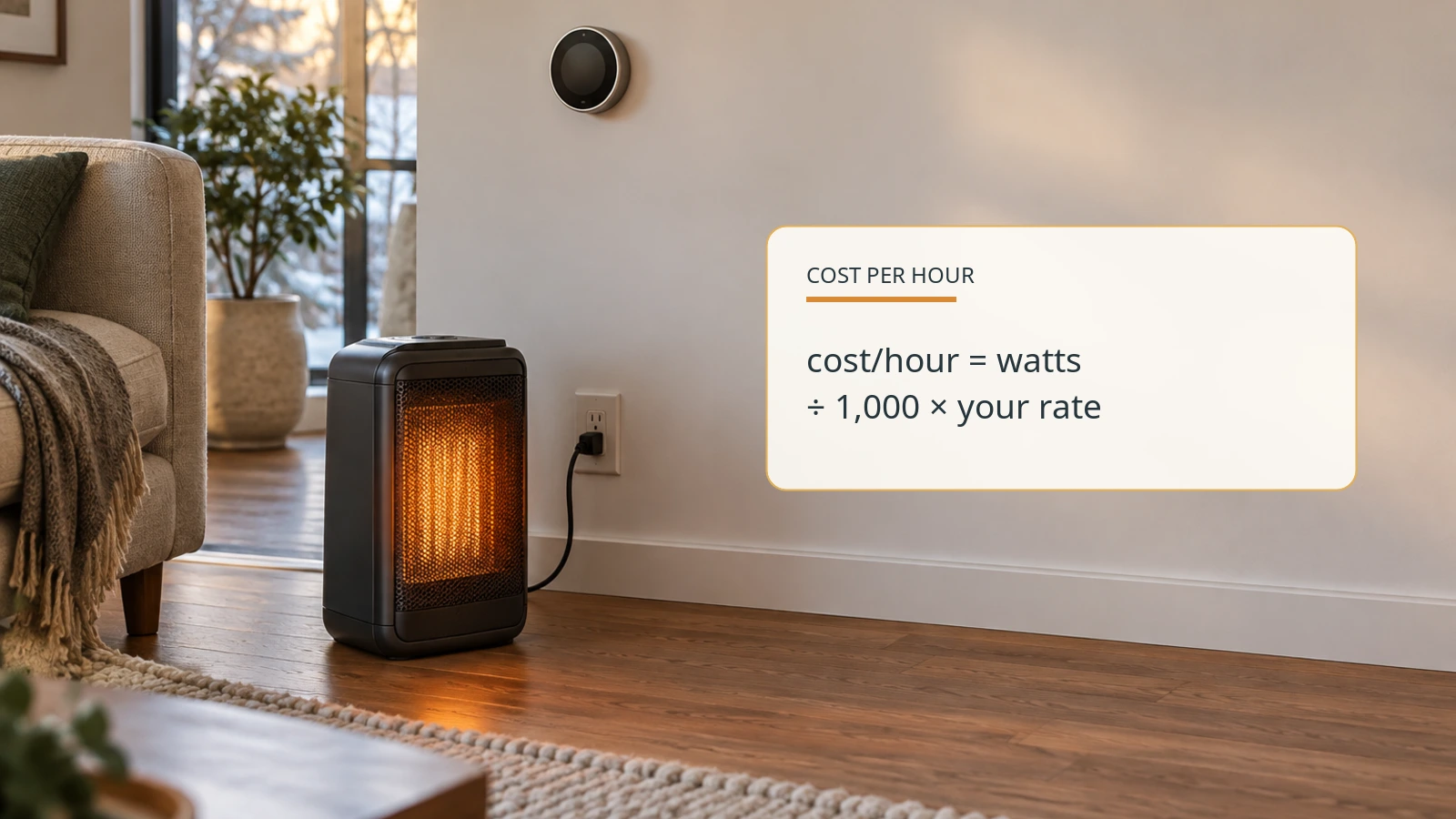
Then use the exact wattage, operating time, and your own electric tariff to understand the added use. A 1,500-watt heater run eight hours a day adds about $2.20 a day at the June 2026 national average rate—your rate, not the national one, is what your bill will feel.[6]
The Physics Fact No Best-List Leads With
Virtually all plug-in 120-volt space heaters top out at 1,500 watts—about 12.5 amps on a standard 15-amp circuit—and whether the element is ceramic, infrared quartz, or oil-surrounded, the electricity that goes in becomes heat at the same ~100% rate.[1] A heater cannot be “more efficient” per watt than another heater; what differs is:
- Delivery: radiant units heat objects and people in their line of sight; convection units warm the room’s air.[2]
- Controls: a thermostat or timer changes how many hours the element actually runs—the one genuine energy lever.
- Placement: heating the occupied room instead of the whole house is where DOE says the savings live—“zone heating can produce energy savings of more than 20% compared to heating the whole area of your house."[1]
The larger lever sits one step up: DOE currently states that today’s heat pumps can reduce electricity use for heating by approximately 65% compared with electric resistance heating such as furnaces and baseboard heaters—if you are heating with resistance year-round, that comparison is worth more than any heater choice.[9] (Already sensing your system runs constantly? See heat pump running all day in winter.)
The Safety Numbers That Should Shape the Purchase

Heating equipment starts an estimated 37,365 home fires a year (2020–2024 average), and the split is the reason this page exists: NFPA reports space heaters and heating stoves account for about 30% of those fires but over seven out of ten deaths (73%) and injuries (70%)—portable heat is disproportionately deadly when it goes wrong.[4] CPSC’s January 2026 winter-safety release estimates portable heaters were involved in about 1,600 residential fires, ~70 deaths, and ~150 injuries annually (2020–2022), and USFA’s data shows portable heaters were 41% of fatal home heating fires even while being a small share of the total.[3][5]
Those are population numbers, not predictions for your living room—and nearly all of them trace to the same failure modes the checklist below prevents.
Displays watts, kWh, and projected cost for anything you plug into it — 0.2% accuracy, 120V/15A, UL listed (P3 International spec sheet). Run it on the heater for a day, multiply by your tariff's rate, and the 'what will this cost' question is answered with your data, not a national average.
Check price on Amazon As an Amazon Associate we earn from qualifying purchases. Price & availability shown on Amazon.com.The Purchase Checklist (in order)
- Nationally recognized lab listing (UL 1278 or ETL-tested-to-UL). DOE’s own guidance: only purchase heaters tested and certified by a recognized testing laboratory.[2]
- Tip-over shut-off. The switch must kill power within seconds of the heater falling. Verify it in the spec table, not the marketing—some widely recommended budget models (Lasko’s popular 754200, for one, per Lasko’s own spec sheet) ship without an auto shut-off.[8]
- Overheat protection and a cool-touch housing, especially with children or pets.
- A thermostat (DOE: it “will help you maintain a comfortable temperature and prevent energy waste”).[1] Timers help; app schedules help more, but the thermostat is the core.
- A 3-foot clearance plan before you buy: CPSC and USFA both say keep anything that can burn at least 3 feet away, and place the heater where cords and walkways don’t cross.[3][5]
Operating Rules That Aren’t Optional
- Direct wall outlet only—CPSC: never an extension cord or power strip, which is how cords overheat.[3]
- Off when you sleep or leave. CPSC’s rule, not a preference.[3]
- Bathrooms and garages: many manufacturers prohibit them outright; where a manual allows it, the outlet must be GFCI-protected, and the manual governs (its instructions are enforceable under electrical code).
- If an outlet, cord, plug, or breaker behaves unexpectedly, stop using the heater and get a qualified electrician—see the site’s why your electric bill spiked with no usage change guide for diagnosing the electrical side.
Ceramic vs. Infrared vs. Oil-Filled: Real Differences
DOE’s categories map to how you use the room:[2]
| Type | How it heats | Best fit | Trade-off |
|---|---|---|---|
| Ceramic (fan-forced convection) | Air blown over a heated element | Whole closed rooms; households with kids/pets (faster surface cooldown) | Fan noise; heats air, not people directly |
| Radiant/infrared | Directly heats objects and people in line of sight | A few hours in one spot—workshop chair, reading corner | Little effect outside the beam; line-of-sight only |
| Oil-filled (convection) | Element warms oil, which radiates steadily | Longer stays; bedrooms (silent, steady output) | Slow to warm; the housing holds heat after shutoff |
None of them is “more efficient”—the choice is comfort delivery plus controls. Anyone marketing an “energy-efficient” heater model against other plug-in models is selling delivery differences as efficiency.
What One Heater Actually Adds to the Bill
The arithmetic with the June 2026 national average residential rate (18.34¢/kWh):[6]
1,500 W × 8 h = 12 kWh per day
12 kWh × $0.1834 = $2.20 per day
30 days ≈ $66 · Nov–Mar season ≈ $330 (at full duty — a thermostat cycles it lower)
Swap in your all-in rate from your bill (total electric charges ÷ total kWh—delivery charges and riders count), and treat the season number as an upper bound: a working thermostat typically keeps the element off much of those hours. If that seasonal figure lands near your current heating spend, the heater is a supplement, not a strategy—see why your electric bill is so high for the whole-house diagnosis sequence.
Measure It Instead of Trusting the Label
The one device that ends heater guesswork: a plug-in usage meter on the heater for 24 hours shows real kWh (thermostat cycling included), and the same meter then audits everything else you suspect.
Displays watts, kWh, and projected cost for anything you plug into it — 0.2% accuracy, 120V/15A, UL listed (P3 International spec sheet). Run it on the heater for a day, multiply by your tariff's rate, and the 'what will this cost' question is answered with your data, not a national average.
Check price on Amazon Price & availability shown on Amazon.com — we may earn a commission.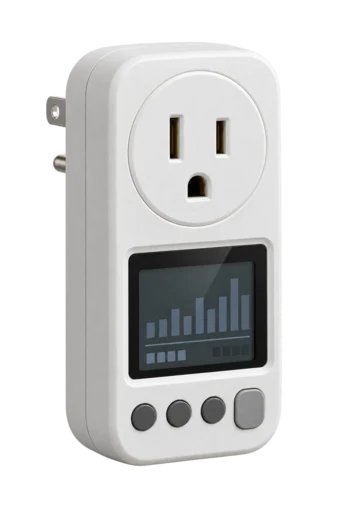
If You Buy: One Model That Clears the Checklist
This page doesn’t do “best lists,” but the checklist above needs an example that passes it. A widely available ceramic model with the documented features—ETL listing, tip-over and overheat shut-off, a real thermostat (41–95°F), and oscillation—checks every box:
See the Dreo Atom One 1500W ceramic heater on Amazon — ETL-listed PTC ceramic with tip-over protection, per Dreo’s spec page. Whichever model you consider, verify those four features on the manufacturer’s own spec table before the checkout.
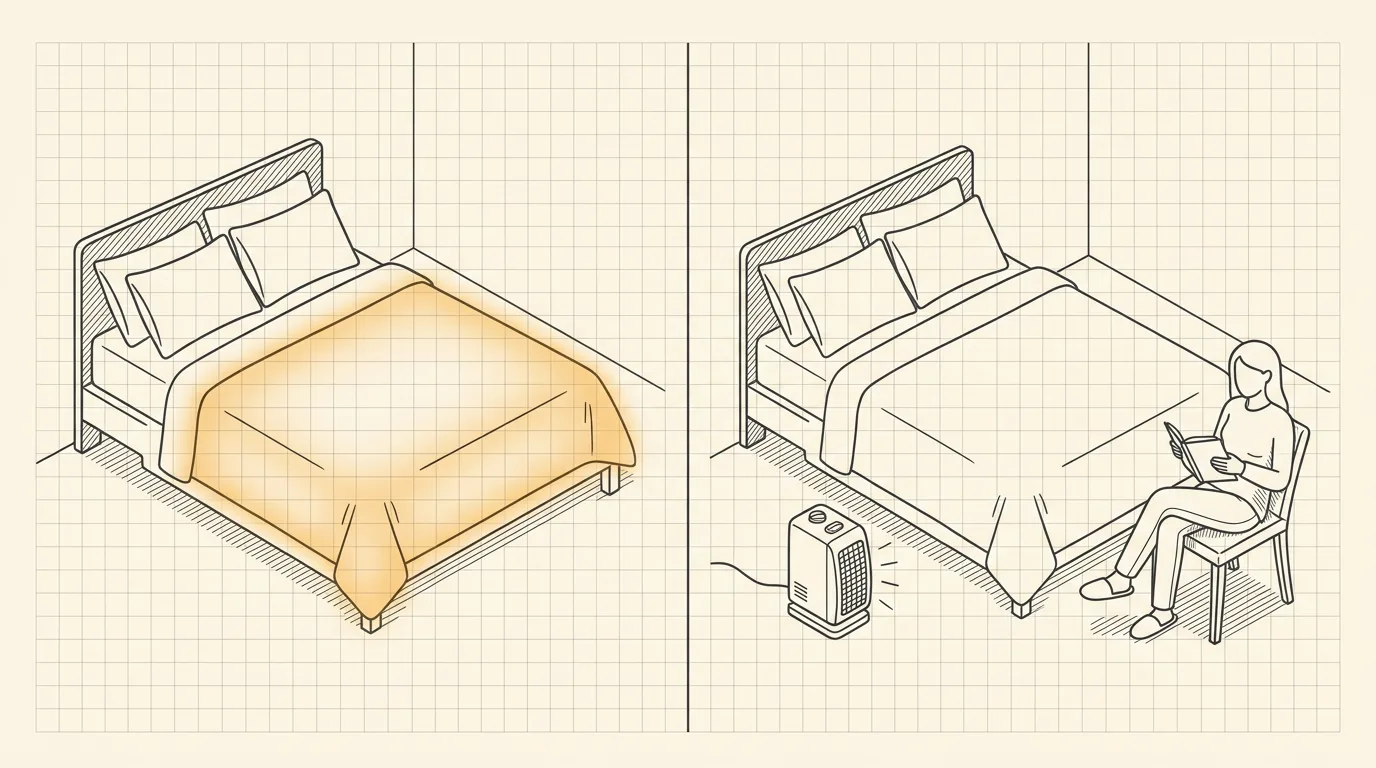
One honest flag before any heater purchase: if the goal is keeping a person warm rather than a room, an electric blanket runs for roughly a tenth of the electricity — two minutes of cost math worth doing first.
What About ENERGY STAR?
There is no ENERGY STAR certification for space heaters—EPA evaluated the category and “has no plans to label them in the near future,” and no specification has existed at any stage through 2025.[8] A heater advertised as “ENERGY STAR certified” is a red flag on the seller, not a feature. (The confusion traces to ENERGY STAR NextGen, a certification for new homes that requires heat pumps—unrelated to plug-in heaters.) Efficiency shopping in this category means controls and safety features, not a label.
Questions Before Purchase or Use
- Does this exact model’s manual permit the intended room and use?
- Is it listed (UL/ETL), with tip-over shut-off confirmed on the spec sheet?
- Can it plug directly into a suitable wall outlet, with 3 feet of clearance, in the room as actually furnished?
- Is the existing primary heating system functioning safely—a furnace blowing cold air is a repair problem, not a space-heater problem?
- What does the rated use add under my own tariff, measured or calculated?
Frequently Asked Questions
Which type of space heater is the most energy efficient?
How much does it cost to run a space heater for a month?
Is it safe to leave a space heater on overnight?
Sources
- U.S. Department of Energy, Energy Saver: Electric Resistance Heating (“100% energy efficient”; zone heating >20%; thermostat guidance) — original URL removed by DOE; archived 2026-05-05
- U.S. Department of Energy: Small Space Heaters (certification, tip-over switch, wall-outlet guidance; convection vs. radiant)
- U.S. Consumer Product Safety Commission, Release 26-217 (Jan 2026): Keep Warm and Safe This Winter (~1,600 fires, ~70 deaths, ~150 injuries/yr, 2020–2022)
- NFPA: Home Heating Safety (2020–2024 averages: 37,365 fires, 417 deaths; space heaters ~30% of fires, 73% of deaths)
- U.S. Fire Administration: Home Heating Fire Prevention (portable heaters 41% of fatal heating fires, 2017–2019)
- EIA: Electric Power Monthly Table 5.3 (June 2026 residential average 18.34)
- ENERGY STAR FAQ: EPA does not label space heaters and has no plans to
- Lasko 754200 manufacturer spec sheet (“No Auto Shut Off”)
- U.S. Department of Energy: Home Upgrades — heat pumps cut heating electricity ~65% vs electric resistance (live figure, retrieved 2026-08-29)