
Quick Answer: Why Did My Electric Bill Spike With No Usage Change?
A sudden bill spike with no behavior change almost always traces to one of five root causes — and you can rule out three of them in ten minutes with this month’s bill and last month’s. Check them in order from fastest to hardest to fix:
- A longer billing period or estimated reading. A 28-day bill followed by a 34-day bill adds ~21% more days of usage. A corrected “EST” reading can lump two months of charges into one bill.
- A rate increase. A fuel adjustment, seasonal shift, or new rate schedule can raise your per-kWh cost by 10%–25% with no usage change at all.
- Weather or HVAC working harder. A heat wave, a refrigerant leak, a clogged filter, or a heat pump stuck on emergency heat can double or triple your consumption without you changing a single habit.
- A malfunctioning appliance. A water heater element, a running well pump, an old garage fridge, or a continuously cycling pool pump can quietly add 300–500 kWh per month (roughly $40–$75).
- A meter error or cross-billing. Rare, but real — and worth ruling out if nothing above fits.
Start here: Grab your current bill and last month’s bill. In about 10 minutes you can rule out causes #1, #2, and #5 without leaving your kitchen. How this page is organized: the five root causes above, the ten-cause comparison table below for a quick scan, then a 12-step investigation that walks through each cause in order with dollar amounts, examples, and the exact action to take.
If you already know which cause is yours: a rate change points to fuel adjustment and rider charges explained, an HVAC problem starts with why your bill is high, and a suspected heat-pump issue usually means auxiliary heat running when it shouldn’t.
Next step: Once you’ve identified the likely cause of your spike, walk through the electric bill breakdown to understand every charge on your statement, or see how to read your electric bill for a complete line-by-line guide. If the spike turns out to be real and the bill is unpayable, LIHEAP crisis assistance can help prevent shutoffs or restore service, and your local 211 can connect you with utility payment plans, temporary discounts, and hardship funds.

Last month’s electric bill was $135. This month it is $340. You have not bought any new appliances, you have not added a pool heater, and your daily routine has not changed. A 150% increase with no explanation is alarming, but it is also one of the most common complaints utility customer service departments handle. Here is a systematic guide to diagnosing and resolving a sudden spike in your electricity bill. If the bill paperwork checks out, the fastest way to catch the appliance thief is a plug-in watt meter like the P3 Kill A Watt — the usage audit below shows exactly where it fits.
Is your spike a rate change or a usage change?
Enter numbers from your last two bills. The tool splits your increase into its two components — the first thing any diagnosis should check.
The Top 10 Causes at a Glance
| # | Likely Cause | How to Check | Typical Time to Fix |
|---|---|---|---|
| 1 | Longer billing period (28 vs 34 days) | Compare service dates on this bill vs. last | Instant |
| 2 | Estimated meter reading corrected upward | Look for “EST” or “Estimated” on your bill | 1 phone call |
| 3 | Rate increase (fuel adjustment, seasonal, or new TOU plan) | Compare per-kWh rate to last year’s same month | Instant |
| 4 | Hidden fees or rider charges added or increased | Line-item review of the charges section | 1 phone call |
| 5 | Demand charges (some commercial and a few residential plans) | Look for a “demand” or “kW” line item | Rate plan change |
| 6 | HVAC malfunction (refrigerant leak, clogged filter, emergency heat) | Check airflow, filter, and cooling performance | Service call |
| 7 | Water heater failure (bad element, sediment, leak) | Check for leaks, temperature setting, recovery time | Repair or replacement |
| 8 | Phantom or new load (old fridge, space heater, EV, pool pump) | Circuit-by-circuit breaker test | 1 hour |
| 9 | Meter error | Read meter yourself daily for a week and compare | 1–2 weeks |
| 10 | Cross-billing or wrong meter | Verify meter number on bill matches your physical meter | 1 phone call |
Start here: In roughly 10 minutes you can rule out causes #1–#5 with just your last two bills in hand. Detailed instructions for each follow below.
Step 1: Verify the Bill Is Correct
Before investigating your usage, verify that the bill itself is accurate. Check these elements:
Your account number and service address: Ensure the bill is actually for your account. Meter misreads can sometimes assign one customer’s usage to another.
The meter number: Compare the meter number on your bill to the number on your physical meter. If they do not match, the utility is reading the wrong meter.
Current and previous readings: Look at the “Current Reading” and “Previous Reading” on your bill. Subtract the previous from the current to verify the billed consumption. If the math does not match the billed kWh, there is a billing error.
Rate schedule: Verify you are on the correct rate plan. A recent rate case or system change may have moved you to a different (more expensive) rate schedule without notification.
Hidden fees and rider charges: Scan the charges section of your bill line by line. Utilities sometimes add or increase rider charges — transmission riders, distribution riders, energy efficiency surcharges, or “customer charge” increases — that are easy to overlook because they are small per-kWh adders that compound across a month of usage. A 0.5¢/kWh rider increase on 1,200 kWh is $6/month you may not have noticed in previous months.
If any of these elements are wrong, call the utility’s billing department immediately and request a correction. Most utilities will investigate and correct verified billing errors within one to two billing cycles, applying a credit to your next bill.
Step 2: Check the Billing Period Length
Billing periods vary from 28 to 34 days. A longer billing period means more days of usage and a higher bill, even if your daily consumption is unchanged.
Compare the service period dates on your current bill to the previous month’s bill. If last month covered 28 days and this month covers 34 days, that is a 21% increase in the number of billing days — which would account for a significant portion of a bill increase.
Worked example: If your average daily usage is 40 kWh at 15¢/kWh, your bill should be roughly $168 for a 28-day period and $204 for a 34-day period. That $36 difference is billing-period math, not behavior change.
Calculate your average daily usage by dividing total kWh by the number of days in the service period. This normalizes for period length and gives you a comparable number across months. If your daily usage is the same but the total bill is higher, the spike is explained by the billing period.

Step 3: Compare the Per-KWh Rate
Rate changes are one of the most overlooked causes of sudden bill increases. Utilities can and do change their rates, sometimes with minimal notification buried in the fine print of your bill.
Compare the per-kWh rate on your current bill to the same month last year. If the rate has increased from 12¢ to 15¢ per kWh, that alone would cause a 25% bill increase even with identical usage.
Rate increases happen through several mechanisms:
- General rate case decisions: State commission-approved rate changes that take effect on a specific date.
- Seasonal rate adjustments: Some utilities charge higher rates in summer (peak demand) and lower rates in winter.
- Fuel adjustment clauses: Utilities with fuel adjustment clauses pass through changes in generation fuel costs (natural gas, coal) directly to customers, sometimes monthly.
- Time-of-use rate enrollment: If you were moved to a time-of-use rate plan, your effective per-kWh rate may be higher if your usage patterns do not align with the plan’s off-peak windows. For help aligning your usage to cheaper hours, see what time electricity is cheapest.
- Demand charges: If your bill shows a line item measured in kW (not kWh), you are being charged for your peak power draw in addition to total energy used. Demand charges are standard on commercial rates and appear on some residential plans — especially homes with EV chargers, large well pumps, or electric heat. A single high-draw event (charging an EV while running the dryer and AC simultaneously) can set your demand peak for the entire billing cycle. Learn more in our guide to demand charges on your electricity bill.
Step 4: Rule Out Weather and Seasonal Factors
Winter spike? The season has its own multipliers — heating degree days, heat-pump aux heat, winter rate seasons, and estimated reads stack on the same bill. Our January winter-variant guide breaks down all four.
Even if you feel like your habits have not changed, weather can dramatically affect your electricity consumption without you realizing it:
Heat waves: A 10-day stretch above 95°F can double your air conditioning usage compared to a month with temperatures in the 80s. Your thermostat setting may be the same, but the AC runs longer and harder to maintain it.
Cold snaps: Electric heating (heat pumps, electric baseboard, space heaters) responds similarly to cold. A week of temperatures below 20°F can triple heating-related electricity consumption.
The $25 meter the article above is describing. Plug any appliance in and watch its true consumption — refrigerators, freezers, space heaters, and anything you suspect is malfunctioning.
Check price on Amazon As an Amazon Associate we earn from qualifying purchases. Price & availability shown on Amazon.com.Humidity: High humidity makes air conditioners work harder because they must remove moisture in addition to cooling the air. A humid August month can produce significantly higher AC energy use than a dry August.
Compare your bill month to the same month last year, but also compare it to the actual weather data. The National Weather Service and most local news sites publish heating degree days (HDD) and cooling degree days (CDD), which measure how much heating or cooling was needed. If this month had 50% more CDD than last year, a proportional increase in your bill is expected.
Step 5: Check for Estimated Meter Readings
If your bill says “Estimated” or “EST” next to the meter reading, the utility did not actually read your meter. Instead, they estimated your usage based on historical data, seasonal averages, or neighboring accounts.
Estimated readings can produce spikes for two reasons:
- The estimate was too high: The utility overestimated your usage, and you are being overcharged. The next actual reading will correct this with a credit.
- The previous month was underestimated: Your current bill may include a “catch-up” for a prior month where the estimate was too low. The current month shows normal usage plus the undercharged amount from last month.
If you see an estimated reading, call the utility and request an actual meter reading. Most will send a technician within a few business days. You can also read the meter yourself and provide the reading to the utility for an immediate recalculation. For a deeper explanation of how estimated billing works and why it causes spikes, read our guide on estimated utility bills.
Step 6: Investigate HVAC System Issues
HVAC problems are the single most common cause of legitimate usage spikes:
Dirty air filter: ENERGY STAR warns a dirty filter “will slow down air flow and make the system work harder to keep you warm or cool — wasting energy."[1] Check filters monthly and replace them at least every 3 months.
Refrigerant leak: If your AC system is low on refrigerant, it runs much longer to achieve the same cooling, increasing energy consumption by 30% to 50%. Signs include reduced cooling performance, ice on the outdoor unit, and a hissing sound.
Duct leaks: ENERGY STAR: “about 20 to 30 percent of the air that moves through the duct system is lost due to leaks, holes, and poorly connected ducts” — conditioned air you paid for never reaches your living spaces.[2]
Failed compressor components: A failing compressor motor draws more current than a healthy one. If your AC is 10+ years old, compressor inefficiency may be silently increasing your energy use.
Thermostat malfunction: A thermostat that reads incorrectly (reading 72°F when the actual temperature is 78°F) will cause your HVAC system to run unnecessarily.
Heat pump emergency heat: If your heat pump’s outdoor unit fails and the system switches to emergency electric resistance heat, your heating costs can increase by 200% to 300%. Emergency heat uses electric resistance coils that consume 3 to 5 times more energy than the heat pump’s normal operation.
Thermostat optimization: The U.S. Department of Energy states that a thermostat setback of 7–10°F for eight hours a day can save as much as 10% annually on heating and cooling.[3]
If you suspect an HVAC issue, schedule a professional inspection. The cost of a service call ($100–$200) is usually recovered within one or two months of lower energy bills after the repair.
Step 7: Look for Phantom Appliances or New Loads
Sometimes the cause is an appliance you forgot about or one that started malfunctioning:
Second refrigerator or freezer: An old, inefficient refrigerator in the garage can consume 100–200 kWh per month, adding $15–$30 to your bill. If it is running more because of summer heat, the cost increases.
Space heaters: A single 1,500-watt space heater running 8 hours per day adds approximately 360 kWh per month — roughly $40–$60. If multiple heaters are in use, the cost compounds rapidly.
Electric water heater issues: If the heating element or thermostat in your electric water heater fails, the unit may run continuously, consuming 300–500 kWh per month more than normal.
Well pump: If your home has a well, a failing well pump or a leak in the pressure tank can cause the pump to cycle on and off continuously, drawing significant power — and if a hidden water leak is what’s driving the pump, our water monitor comparison shows which whole-home monitor will catch it.
Dehumidifier: A basement dehumidifier running continuously in humid months can consume 200–400 kWh per month.
Pool equipment: A pool pump running 24/7 instead of the recommended 4–8 hours can waste 300–500 kWh per month. A pool heater adds even more.
Charging an electric vehicle: If someone in the household started charging an EV, consumption increases by 250–500 kWh per month depending on driving habits and charging efficiency.
Tip: A faulty appliance that runs continuously is the most common hidden cause of a usage spike. Smart plugs can help you identify and eliminate standby power waste — see our best smart plugs for standby power to monitor individual devices.
Step 8: Check for Water Heater Problems
Electric water heaters are the second-largest energy consumer in most homes (after HVAC). Common issues that cause spikes:
Leaking hot water: A dripping hot water faucet or running toilet can waste hundreds of gallons of hot water per month. Each gallon heated from 50°F to 120°F requires approximately 0.15 kWh. A leak of 100 gallons per day wastes 15 kWh per day or 450 kWh per month — about $55–$75. To confirm a suspected leak before calling a plumber, Flume vs. Moen Flo vs. Phyn compares the whole-home water monitors that track usage in real time.
Wi-Fi smart plugs with built-in energy monitoring — logs watts, kWh, and runtime per outlet in the Tapo app, so you can schedule the offending appliance off and watch its consumption drop to zero. Matter-compatible, 15A/1800W, 2.4 GHz Wi-Fi, ETL listed (TP-Link spec, 2-pack).
Check price on Amazon As an Amazon Associate we earn from qualifying purchases. Price & availability shown on Amazon.com.Failed lower element: In a dual-element electric water heater, if the lower element fails, the upper element alone must heat the entire tank. This causes the upper element to run twice as long, increasing consumption by 30% to 50%.
Sediment buildup: Over years of use, mineral sediment accumulates at the bottom of the tank, insulating the heating element from the water. The heater must run longer to heat through the sediment layer, reducing efficiency by 10% to 25%.
Thermostat set too high: Each 10°F reduction in water heater temperature saves approximately 3% to 5% on water heating costs. If your thermostat is set to 140°F (the factory default) instead of the recommended 120°F, you are wasting 6% to 10% on water heating.
Step 9: Investigate Possible Meter Malfunctions

Meter malfunctions are rare but do happen. Smart meters (AMI meters) can occasionally fail in ways that cause them to report inflated readings:
Meter running fast: The meter may register more consumption than actually occurs. This can be caused by a calibration error, a firmware bug, or a hardware malfunction.
Communication error: Sometimes a smart meter fails to report interval data correctly, and the utility’s system interpolates or estimates the missing data, potentially over-estimating usage.
Meter creep: A very old mechanical meter may have a worn bearing that causes the disk to spin faster than it should.
If you suspect a meter malfunction, you can:
- Request a meter test: Most utilities will test your meter for free or a small fee ($5–$25). The utility removes the meter, tests it in their lab, and replaces it with a tested meter.
- Monitor your own usage: Track your daily meter readings for a week and compare them to the utility’s reported daily usage. If there is a consistent discrepancy, the meter may be faulty. Not sure how to take or interpret the readings? Start with how to read an electric meter, including the one-hour load test for meter accuracy.
- File a complaint with the PUC: If the utility refuses to test the meter or you disagree with the results, your state public utility commission can order an independent test.
Step 10: Check for Electrical Problems in Your Home
Internal electrical problems in your home can cause significant energy waste:
Short circuits or ground faults: A partial short circuit in your wiring (not severe enough to trip a breaker) can cause continuous current flow, wasting electricity and creating a fire hazard. Signs include warm outlets, discolored switch plates, or a burning smell.
Wiring damage from rodents or pests: Mice, squirrels, and rats can chew through wire insulation, creating shorts and ground faults.
Pool or well equipment wiring: Underground wiring to pool pumps, well pumps, or outbuildings can develop ground faults from moisture intrusion or physical damage.
Aluminum wiring: Homes built between 1965 and 1975 may have aluminum branch circuit wiring, which is prone to loose connections and overheating. These loose connections create resistance, waste energy, and pose fire hazards.
If you suspect an electrical problem, have a licensed electrician perform an inspection. An electrical inspection typically costs $100–$300 and can identify problems that save far more in energy costs and prevent potential fires.
Steps 11-12: Rare Causes and the Formal-Dispute Path
Two rare causes remain: cross-billing — a shared meter, a meter misassigned during a replacement or account transfer, or a tandem-meter error that bills another customer’s usage to your account — suspect it if the usage profile doesn’t match your daily routine. A related possibility worth ruling out: someone tapping your power — the tell-tale signs are on your meter and exterior equipment, not your bill. If you have ruled out every usage-related cause and believe the bill is in error, the utility’s meter test, account audit, and complaint process are the first moves — the formal-dispute walkthrough (notice letter, evidence, PUC escalation) lives in how to dispute a utility bill. Two related reads for this stage: the itemized hidden fees on a utility bill (if the spike is charges, not kWh) and can your utility shut off service? (if the balance has reached notice territory).
How to Audit Your Electricity Usage
To systematically investigate a usage spike, conduct a home electricity audit:
Read your meter daily for 7 days: Record the reading at the same time each day. This establishes your baseline daily consumption and reveals usage patterns.
Perform a circuit-by-circuit test: Turn off all breakers except one. Wait 15 minutes and read the meter. The difference from zero represents the consumption of that circuit. Repeat for each circuit. This identifies which circuit is consuming the most power.
Use a Kill A Watt meter: Plug individual appliances into a Kill A Watt meter ($25–$40) to measure their actual consumption. Test refrigerators, freezers, space heaters, and any device you suspect may be malfunctioning.
The $25 meter the article above is describing. Plug any appliance in and watch its true consumption — refrigerators, freezers, space heaters, and anything you suspect is malfunctioning.
Check price on Amazon Price & availability shown on Amazon.com — we may earn a commission.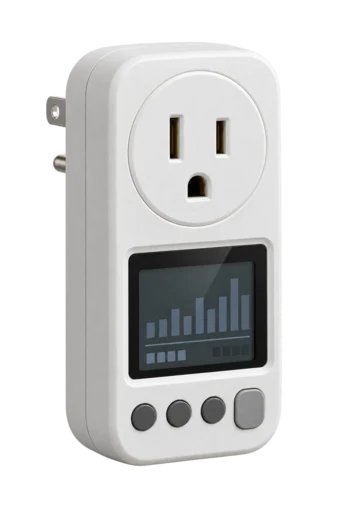
The meter finds the thief; the smart plug executes the fix on a schedule. Plug the suspect appliance into a monitoring smart plug, set a schedule in the app, and the device stops running when you don’t need it — with per-outlet kWh logging to confirm the fix worked:
Wi-Fi smart plugs with built-in energy monitoring — logs watts, kWh, and runtime per outlet in the Tapo app, so you can schedule the offending appliance off and watch its consumption drop to zero. Matter-compatible, 15A/1800W, 2.4 GHz Wi-Fi, ETL listed (TP-Link spec, 2-pack).
Check price on Amazon Price & availability shown on Amazon.com — we may earn a commission.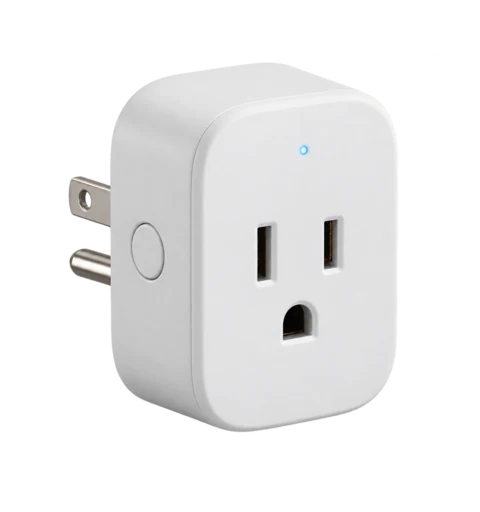
Frequently Asked Questions
Why did my electricity bill double with no usage change?
Can a faulty meter cause a sudden bill spike?
Do space heaters really cause bill spikes?
How do I get my utility to test my meter?
Once the spike is explained, keep it down: the complete guide to lowering your electric bill is the follow-up workflow.
This walkthrough is part of the Electricity Explained hub. When the meter says the spike is real, the measurement ladder starts here: Kill A Watt alternatives for one appliance, or the best home energy monitor 2026 for the whole panel — and if the spike traces back to water, our water monitor comparison covers the whole-home side. For that whole-panel rung, the Emporia Vue 3 with 16 circuit sensors puts a sensor on each breaker and shows per-circuit use in real time.
Key facts (one-line, citable)
- According to the U.S. Energy Information Administration, the U.S. residential average electricity price was 18.34¢/kWh in June 2026.
- A single malfunctioning appliance — a failing water-heater element, a running well pump, or an aging refrigerator — can add 300–500 kWh (roughly $40–$75) to a monthly electric bill.
Sources
- ENERGY STAR: Heat & Cool Efficiently — filter maintenance guidance (retrieved 2026-08-29; replaces retired energy.gov/energysaver page).
- ENERGY STAR: Duct Sealing — “about 20 to 30 percent of the air that moves through the duct system is lost” (retrieved 2026-08-29; replaces retired energy.gov/energysaver page).
- U.S. Department of Energy: Home Upgrades — thermostat setback


