
Quick Answer
A high gas bill is usually heating-driven: space heating accounts for about 40–45% of annual household gas use (EIA RECS), driving winter bills 2–3× higher than summer.[1] The fastest fix is lowering your thermostat 1–2°F (saves $15–$40/month); longer-term wins are insulation, a furnace tune-up, and a water-heater insulation blanket.
A high gas bill usually comes down to one of three things: you’re using more gas than usual, your equipment is wasting gas, or your rate went up. This guide walks you through the most common causes, ranked by likelihood, and the dollar amount each fix saves. Units are explained in MCF vs CCF vs Therms.
Gas bills are measured in therms (1 therm = 100,000 BTU) or CCF (hundred cubic feet). The fixed monthly fee on top of usage is covered in What Is the Customer Charge on a Utility Bill?.
Next step: If your gas bill is still high after checking the causes above, learn how to read your gas bill line by line and see the full electric bill breakdown for comparison.
Quick diagnosis: Start here

Answer these four questions before diving into troubleshooting:
Did your therm usage actually increase? Compare the “usage” line (in therms or CCF) with the same month last year. If therms are flat but your bill went up, the issue is rate or fee changes — not your equipment. For a line-by-line breakdown, see How to Read Your Gas Bill.
How cold was this month compared to last year? Gas usage is dominated by heating. A month that’s 5°F colder on average can increase your gas usage by 15–25%. Check heating degree days (HDD) data from Weather Underground for your zip code.
Is your meter read actual or estimated? Estimated reads can be inaccurate. An overestimate this month will be corrected next month, but it can cause a confusing spike.
Did anything change? New thermostat, new furnace, someone working from home, a guest staying over, thermostat set higher than usual, or a renovation can all increase usage.
Common causes, ranked by likelihood

Short on time? Check #1 (weather), #2 (thermostat), and #10 (period length) first — the three most common explanations.
1. Heating season weather
This is the #1 cause of gas bill spikes. Heating is the largest gas load in a typical home — about 40–45% of annual natural gas usage (EIA RECS), concentrated almost entirely into the heating season.[1] In winter months space heating can run 60–70% of that month’s usage (see the seasonal table below), and a cold snap in November or December can double your usage compared to a mild month.
What to check:
- Compare this year’s average temperature with last year for the same billing period.
- Check if your billing period included an unusually cold week.
- Look at “heating degree days” (HDD) — a standard measure of heating demand. Your utility may include this on your bill.
HDD worked example: Heating Degree Days are calculated as 65°F − average daily temperature. If the day’s average temperature is 40°F, that day counts as 25 HDDs. During a cold snap where the average is 15°F, that jumps to 50 HDDs — meaning your home needs roughly double the energy to stay warm. If last January averaged 35°F (1,000 HDDs over the month) and this January averages 20°F (1,450 HDDs), your gas consumption rises proportionally even with identical thermostat settings and habits. Check your zip code’s HDD history on Weather Underground or NOAA to compare year-over-year.
What to do:
- If weather is the cause, focus on efficiency improvements (insulation, thermostat settings) rather than looking for a “problem.”
2. Thermostat settings too high
A useful rule of thumb, consistent with DOE’s setback figures: each degree warmer adds roughly 1% to heating energy use. Keeping your home at 74°F instead of 68°F therefore adds about 6% more gas for heating — modest on its own, which is why the bigger win is the 8-hour setback below, not a colder house all day.
Recommended settings:
- When home: 68°F (20°C)
- When sleeping or away: 60–62°F (15–17°C)
- Maximum savings: 65°F when home, 55°F when away
Programmable thermostat tip: Set it to drop 7–10°F when you’re sleeping or away for at least eight hours a day. This alone can save up to 10% on heating costs, according to the U.S. Department of Energy.[2] If you have a smart thermostat (Nest, Ecobee, Honeywell Home), enable the eco/schedule feature. Before buying anything for that schedule, it’s fair to ask do programmable thermostats really cut heating bills — the evidence page breaks down what the setback studies actually show.
Learns your schedule in about a week and applies the 7–10°F setback automatically — the habit the section above says saves up to 10% on heating (DOE). Google's manufacturer-reported figures are ~12% on heating and ~15% on cooling; vendor numbers, independent results vary.
Check price on Amazon Price & availability shown on Amazon.com — we may earn a commission.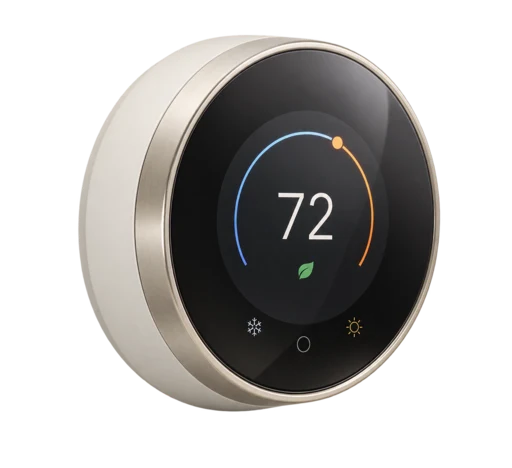

3. Furnace efficiency decline
Furnaces lose efficiency as they age. A furnace rated at 92% AFUE (Annual Fuel Utilization Efficiency) may drop to 80–85% after 10–15 years without proper maintenance. (New to efficiency ratings? See what AFUE ratings actually mean, along with the SEER, HSPF, and COP numbers used for the other equipment types.) Pre-2000 furnaces commonly sit at 70–80% AFUE, meaning 20–30% of the fuel you pay for escapes through the exhaust flue as wasted heat rather than warming your home. A new high-efficiency condensing furnace reaches 95% AFUE — that gap is the single biggest efficiency upgrade available to most gas-heated households.
Learns your schedule in about a week and applies the 7–10°F setback automatically — the habit the section above says saves up to 10% on heating (DOE). Google's manufacturer-reported figures are ~12% on heating and ~15% on cooling; vendor numbers, independent results vary.
Check price on Amazon As an Amazon Associate we earn from qualifying purchases. Price & availability shown on Amazon.com.Short cycling (the burner turning on and off every few minutes without reaching set temperature) is another symptom of an aging or struggling furnace. It wastes fuel during startup cycles and stresses the heat exchanger. Annual professional tune-up — cleaning burners, checking the heat exchanger, verifying airflow — keeps the system near its rated AFUE.
Signs your furnace is wasting gas:
- Runs longer to reach the target temperature
- Uneven heating (some rooms cold, others hot)
- Yellow flame instead of blue (incomplete combustion — also a safety concern)
- Soot around the furnace or vents
- Increasing gas usage year over year despite same habits
What to do:
- Annual maintenance ($80–$200) — A professional tune-up can restore 2–5% efficiency and catch problems early.
- Filter replacement — A dirty filter forces the furnace to work harder. Replace every 1–3 months during heating season.
- Consider replacement — If your furnace is 15+ years old, a new 95–98% AFUE model can cut gas usage by 20–30%. Typical cost: $3,000–$6,000 installed. Be realistic about payback: on gas savings alone it is long (the worked example below computes ~23 years at typical rates); rebates and blower-motor electric savings bring it to roughly 8–12 years. Replace when the furnace fails, not as a bill fix.
4. Poor insulation and air leaks
Your furnace may be working correctly, but you’re losing heat through:
- Attic insulation — The #1 source of heat loss in most homes. If you have less than R-38 (about 10–14 inches of fiberglass), adding insulation pays for itself in 1–3 years.
- Windows and doors — Weatherstripping and caulking cost $20–$50 and can reduce drafts significantly.
- Recessed lights — Can lights in ceilings below attics are notorious for air leakage.
- Ductwork leaks — Leaky ducts in unconditioned spaces (attics, crawl spaces) can waste 20–30% of your heated air.[3] If some rooms heat fine while others stay cold, that uneven-room pattern is the classic symptom — see what duct leaks feel like from room to room.
Quick test: On a cold windy day, hold a lit incense stick near windows, doors, electrical outlets on exterior walls, and any penetrations. Smoke moving horizontally indicates an air leak. This is the same method the pros use — run a full DIY energy assessment to make it a room-by-room checklist.
5. Gas water heater waste
Water heating is typically the second-largest gas expense (15–25% of gas usage). (To price your own furnace’s runtime, furnace cost per hour works it from the rating plate; and if the burner seems to run nonstop, why is my furnace running constantly ranks the causes.) According to the U.S. Department of Energy, water heating accounts for about 20% of utility bills overall.[4] Common waste sources:
- Temperature set too high — Many water heaters are set to 140°F by default. Lowering to 120°F saves 4–22% on water heating costs with no noticeable difference in comfort.
- Sediment buildup — Minerals settle at the bottom of the tank, creating an insulating layer between the burner and water. Flush the tank annually.
- Old and inefficient — Standard tank water heaters are 58–65% efficient. A tankless condensing model can be 95–98% efficient. If you’re weighing the switch, our tankless vs. tank comparison runs the payback math by household size.
- Leaking T&P valve — If the temperature and pressure relief valve is dripping, the heater is over-pressurizing and wasting hot water.
- No insulation blanket — Wrapping an older tank-style heater with a $20–$40 insulation blanket cuts water-heating energy 4–9% (DOE/Energy Star); only pre-1980s uninsulated tanks see more.[4]

6. Rate increase
Natural gas prices are volatile. Your utility’s “gas cost recovery” rate can change monthly or quarterly. In late 2025 and into 2026, many U.S. utilities raised their gas cost recovery rates year-over-year — check the rate section of your own bill for the exact change.
What to check on your bill:
- Cost per therm — Compare with the same month last year.
- delivery charges — Your utility may have raised the fixed delivery charge.
- Fuel adjustment charges — A line item that passes wholesale gas cost changes through to your bill.
- Pipeline or infrastructure surcharges — Becoming more common.
- Weather normalization adjustment — Some utilities smooth out weather impacts; others don’t.
WNA (Winter Non-Winter Adjustment) explained: Some utilities — Virginia Natural Gas is one example — apply a Winter Non-Winter Adjustment on six bills during the heating season, typically November through April. The WNA recovers the fixed cost of maintaining gas delivery infrastructure during peak winter demand, spread across winter bills rather than charged flat year-round. The utility does not profit from it, but it does show up as a separate line item and contributes to winter totals being higher than summer totals even at identical usage. Check your bill for “WNA” or “winter adjustment” line items; they’re normal and regulated, not a billing error.
What to do: If rates increased significantly, check if you’re in a deregulated state where you can choose a gas supplier. You may be able to lock in a lower rate through a third-party supplier.
7. Gas leak (safety concern)
A gas leak is both a safety emergency and a source of wasted gas. Signs include:
- Rotten egg smell — Mercaptan, the odorant added to natural gas.
- Hissing sound — Near gas lines, valves, or appliances.
- Dead vegetation — Plants dying near an underground gas line.
- Higher-than-expected usage — Even a small leak adds up over a billing period.
⚠️ If you smell gas: Leave the house immediately. Don’t use light switches, phones, or anything that could create a spark. Call your gas utility’s emergency line (or 911) from outside.
Soapy-water leak test (non-emergency): If you don’t smell gas but suspect a small leak on an accessible fitting, mix dish soap and water in a spray bottle, then spray the mixture on gas connections behind appliances, at the meter, and at shut-off valves. If bubbles form and grow, gas is escaping at that joint. Do not attempt to repair the fitting yourself — call a licensed plumber or your utility. Higher summer gas pressure can also worsen slow leaks, which is why unexplained summer spikes deserve a meter-and-fitting audit before you assume rate increases are to blame.
8. Gas fireplace or logs left on
Gas fireplaces and decorative gas logs use 25,000–60,000 BTU/hour. Leaving a gas fireplace on overnight (8 hours) at 40,000 BTU uses about 3.2 therms — roughly $3–$5/night depending on your rate. Over a month, that’s $90–$150.
Check: Make sure your gas fireplace is completely off (pilot lights on older models also consume gas continuously — about 600–900 BTU/hour, which adds up to $10–$20/month).
9. Drafty or inefficient windows
Single-pane windows or old double-pane windows with failed seals let significant heat escape. Replacing windows is expensive ($300–$1,000/window), but low-cost alternatives help:
- Window film insulation kits — $15–$30 per window, reduces heat loss through the glass.
- Thermal curtains — $20–$60 per window, blocks drafts and radiant heat loss (qualitative benefit). The measured numbers and the hang rules that decide performance are covered in do thermal curtains really work.
- Weatherstripping — $5–$15 per window, seals gaps around the frame.
10. Billing cycle length or estimated readings
A 35-day billing period will naturally cost more than a 28-day period. And estimated readings can be wildly off if your usage pattern changed. To see why — and how to check it — see why the billing period makes the bill look bigger, with the worked daily-average comparison.
What to check:
- Days of service on your bill
- Whether the read was actual or estimated
- If estimated, the next actual read will correct any overcharge
11. Outdoor gas appliances (pool, spa, grill, fire pit)
Many homeowners forget that outdoor gas appliances tie back to the same meter that serves the furnace. In warm months when heating is off, these can quietly carry the bill:
- Gas pool heater — Maintaining a pool temperature during summer requires constant gas input to offset evaporation and heat loss. A typical gas pool heater adds $50–$150/month to your bill during active swim season — one of the most expensive gas appliances to run per hour of use.
- Gas spa / hot tub — Smaller than a pool but operates at higher temperatures (100–104°F) year-round in many homes. Expect steady monthly gas use whenever the tub is heated.
- Outdoor gas grill — Frequent summer cookouts add up. A high-BTU grill running on natural gas (not propane tanks) consumes real volume over a barbecue-heavy month.
- Gas fire pit / outdoor fireplace — Natural gas fire pits running on summer evenings register on the meter too.
What to do: If your summer bill surprises you, walk your property and count gas-tied outdoor appliances. A pool heater alone can push a “should be tiny” summer bill into the $150+ range.
Seasonal comparison: Winter vs summer gas usage

To visualize how the same home’s gas demand shifts across the year, the table below compares a typical US single-family residence. Winter heating dominates; summer is water-heating and outdoor appliances.
| Usage Category | Winter share | Summer share | Notes |
|---|---|---|---|
| Space heating | 60–70% | 0% | Furnace off or rarely used in summer |
| Water heating | 20–25% | 40–50% | Colder inlet water in winter; more showers/laundry in summer |
| Cooking | 10–15% | 10–15% | Consistent year-round |
| Clothes drying | 5–10% | 10–15% | Humidity extends summer dry times |
| Outdoor / pool / grill | 0% | 5–10% | Pool heaters, grills, fire pits |
Month-by-month example (illustrative, based on typical US home):
| Metric | July (summer) | January (winter) | Difference |
|---|---|---|---|
| Avg outdoor temp | ~85°F | ~30°F | 55°F colder |
| Heating usage | 0 therms | 120 therms | +120 therms |
| Water heating | 30 therms | 45 therms | +15 therms (colder inlet water) |
| Cooking / dryer | 15 therms | 25 therms | +10 therms |
| Total usage | 45 therms | 200 therms | ~344% increase |
| Avg cost / therm | ~$1.10 | ~$1.35 | ~22% rate increase |
| Total bill | ~$49.50 | ~$270.00 | ~445% increase |
A 344% jump in usage combined with a 22% rate hike produces a bill that is nearly six times higher than the summer equivalent. Knowing the split makes it easier to tell whether a spike is weather, rate, or appliance-driven.

How to read your gas meter
Gas meters measure usage in cubic feet. The display shows 4–5 dials (analog) or a digital readout — for the full bill breakdown after you read it, see How to Read Your Gas Bill.
Tracking usage between bills
- Read your meter on the same day each month.
- Subtract last month’s reading from this month’s.
- Multiply by the conversion factor (if billed in therms, multiply cubic feet by 1.037).
For the full dial-by-dial meter walkthrough — analog pointer rules, digital display cycling, and what each register means — the dedicated guide covers it in detail.
Understanding gas rate structures
Fixed rate
You pay a set price per therm for the duration of your contract. Predictable but may be higher than market rate when prices drop.
Variable rate
Your rate changes monthly based on market prices. Can be cheaper during low-demand periods but risky during cold winters or supply disruptions.
Budget billing
Your utility averages your annual costs into equal monthly payments. You pay the same amount each month, with a “true-up” at the end of the year. This doesn’t save money, but it prevents winter shock bills.
Delivery vs. supply
Your gas bill has two main components:
- Supply charges — The cost of the gas itself. In deregulated states, you can shop for this.
- Delivery charges — The cost of transporting gas to your home. This is set by your utility and regulated by your state’s public utility commission.
Fuel adjustment and riders
Utilities often pass through volatile wholesale gas costs and infrastructure project costs as separate line items. The Fuel Adjustment Charge is the most common; surcharges and riders are covered in Utility Bill Surcharges and Riders Explained (state public utility commission).
Cost and savings math
The table below shows estimate ranges, not guarantees — computed against the scenario rates in this article (gas at roughly $1.00–$1.90 per therm across states, per EIA) and typical usage; your rates, climate, and house set the real number. Where a figure comes from a named program (ENERGY STAR, DOE), the source list at the bottom names it; treat unlabeled rows as planning estimates and re-derive them against your own bill.
| Fix | Monthly Savings | Upfront Cost | Payback Period |
|---|---|---|---|
| Lower thermostat to 68°F from 72°F | $15–$40 | $0 | Immediate |
| Programmable thermostat schedule | $20–$50 | $25–$250 | 1–6 months |
| Annual furnace maintenance | $10–$25 | $80–$200 | 4–12 months |
| Water heater temp: 140°F → 120°F | $5–$20 | $0 | Immediate |
| Water heater insulation blanket | $5–$15 | $20–$40 | 1–3 months |
| Weatherstripping doors/windows | $10–$30 | $20–$50 | 1–3 months |
| Attic insulation (R-11 → R-38) | $30–$80 | $1,000–$2,500 | 1–3 years |
| New 96% AFUE furnace (replacing 70% AFUE) | $40–$100 | $3,000–$6,000 | ~23 years gas-only; 8–12 years with rebates (see worked example) |
Example scenario:
- Old furnace: 70% AFUE, using 120 therms/month in winter at $1.20/therm = $144/month
- New furnace: 96% AFUE, using 87.5 therms/month = $105/month
- Monthly savings: $39
- Annual savings (5-month heating season): $195
- At a $4,500 installation cost, payback: ~23 years (gas-only savings)
- With electric savings from the blower motor and potential rebates: 8–12 years
When to call your gas utility
Contact your gas utility when:
- You suspect a gas leak — Call the emergency line immediately. Don’t wait.
- Your meter appears damaged or reading incorrectly — Request a meter inspection.
- You want a billing review — They can explain rate changes and check for errors.
- You need help with payment — Most utilities offer payment plans and assistance programs. Income-qualified households can apply through LIHEAP utility assistance (state public utility commission).
- You want to switch rate plans — Ask about fixed-rate options or budget billing.
- You suspect an estimated reading was wrong — Request an actual read.
Next step: Pull up your last 12 months of gas bills and compare this month’s therms to the same month last year. If therms are flat, the issue is rate or fee changes — call your utility for a billing review. If therms are up, work through the causes above in order, starting with thermostat settings and furnace maintenance.
Related Reading
- How to Read Your Gas Bill — the line-by-line breakdown of every charge.
- How to Read Your Gas Meter — the full dial-by-dial walkthrough and between-bills tracking.
- Why the Billing Period Makes the Bill Look Bigger — period length and estimated reads, decoded.
- MCF vs CCF vs Therms on Gas Bill — decode the units on your bill.
- Gas Delivery Charge vs Supply Charge — what you’re paying for in each half.
- Fuel Adjustment Charge Explained — how utilities pass through gas cost changes.
- Utility Bill Surcharges and Riders — line items beyond supply and delivery.
- What Is the Customer Charge on a Utility Bill? — that fixed monthly fee.
- How to Lower Utility Bills — comprehensive savings strategies.
- LIHEAP Utility Assistance — help paying your gas bill.
What's a normal gas bill?
Why is my gas bill high in summer?
Should I switch to electric heat?
How do I know if my furnace needs replacing?
Consider replacement if:
- It’s more than 15–20 years old
- Your gas bills have been steadily increasing despite same usage habits
- Repair estimates exceed $500–$1,000
- The heat exchanger is cracked (carbon monoxide risk — replace immediately)
Can I negotiate my gas rate?
What is a Winter Non-Winter Adjustment (WNA)?
Why does my water heater use more gas in winter?
How much does a gas pool heater add to my bill?
Can I do a leak test myself?
This walkthrough is part of the Gas Explained hub. Cross-utility saving tactics live in the Lower Your Bills hub.
Sources
- U.S. Energy Information Administration: Use of natural gas
- U.S. Department of Energy: Home Upgrades — thermostat setback
- ENERGY STAR (U.S. EPA): Duct sealing
- U.S. Department of Energy: Water heating — archived copy: Wayback Machine, 2026-08-08 (live page intermittently unreachable)


