Quick Answer
Most often it’s a running toilet — do the 10-minute dye test now. Add a few drops of food coloring to the toilet tank, wait 10 minutes without flushing, and look at the bowl: if color appears, the flapper is leaking and every minute counts against your meter.[2]
The test is free, the leak hides inside a closed tank where nothing looks broken, and EPA tells homeowners to test toilets for silent leaks this way at least once a year because flappers wear out.[2]
Beyond spot checks, the full protection ladder — point sensors, meter monitors, automatic shutoff — is walked in when to upgrade your leak protection. The first rung is a five-pack of leak sensors like the Govee under the water heater, washer box, and sinks — where slow leaks hide longest.
Then run the 3-step meter check to confirm water is (or isn’t) moving somewhere else:
- Shut off every faucet, ice maker, dishwasher, washing machine, and irrigation zone.
- Find your water meter (curbside pit or basement) and note the reading — or watch the small leak-indicator dial.
- Wait. EPA’s protocol: read the meter, read it again two hours later with no water use in between. If the reading changed, you have a leak in the home.[2]
One thing federal help can’t fix right now: LIHWAP — the Low Income Household Water Assistance Program, which helped low-income households pay water and wastewater bills — has no funding available and isn’t accepting new beneficiaries. For help paying a water bill, ask your utility about payment plans or temporary discounts, call 211 for local programs, or contact your local Community Action Agency.
Dye test clean and meter dead-still? Work down the ranked causes below. Bill jumped one month over the last? Why water bills suddenly increase is the faster path.
The Causes, Ranked by Likelihood

Ranked by how often each explains a high bill — and how cheap the confirming test is.
1. A leaking toilet
A worn flapper lets tank water seep into the bowl around the clock — silent, invisible, adding thousands of metered gallons before anyone notices. In most U.S. cities sewer is billed on metered water, so the leak hits the bill twice. EPA advises replacing flappers at least once every five years.[2]
How to confirm: the 10-minute dye test above — food coloring in the tank, no flush, color in the bowl means a leak.[2] Full walkthrough and repair options: is your toilet running? The simple leak test.
2. Irrigation and outdoor use
EPA puts outdoor use above 30 percent of household water use on average and as much as 60 percent in arid regions — and up to half of outdoor water is lost to wind, evaporation, and runoff from inefficient irrigation.[1]
How to confirm: run each irrigation zone and walk it — broken heads, misting, pooling, sidewalk spray. Run one cycle at dawn while watching the meter: creep during irrigation-only windows puts the loss outdoors. Deep dive: why water bills climb in summer.
3. A rate, tier, or billing change
Your bill can climb with zero change in gallons. Utilities raise rates, restructure tiers, add surcharges, adjust sewer formulas — and under tiered rates, modest extra usage can land your household in a much more expensive block. In a declared drought, many utilities also add a temporary drought surcharge — see how a drought surcharge on your water bill is calculated before assuming a rate change is permanent.
How to confirm: put the current statement beside last year’s same-month statement and compare the usage line and the rate lines separately — usage up is a leak-or-behavior problem; usage flat with a higher total is a rate problem. Check the tariff, tier breakpoints, and any one-time charges. Full method: tiered water rates explained.
Contact sensors that alarm at 105 dB and send phone alerts when they touch water. Place under the water heater, behind the washing machine, and under sinks — where slow leaks hide longest.
Check price on Amazon As an Amazon Associate we earn from qualifying purchases. Price & availability shown on Amazon.com.4. Meter error or estimated reads
Meters are usually right, but estimated reads, misreads, and failing meters happen.
How to confirm: check the bill for an “estimated” or “customer read” label, then compare the bill’s ending meter figure to the physical meter — they should match within a dial or two. See how to read a water meter (and know if it’s accurate). If they don’t reconcile, ask the utility for a meter test (questions below).
5. A longer billing period
Bills don’t always cover 30 days — cycles run ~28 to ~35 days, and “more days at the same daily rate” reads as a spike on paper.
How to confirm: divide billed gallons by the service-period days printed on the statement and compare with last bill’s daily figure. Daily use flat, total up? That’s the calendar, not a leak.
6. Seasonal and household changes
Houseguests, more showers, a new appliance, a pool, evaporative cooling — usage moves with the calendar. Outdoor use drives the biggest seasonal swing.[1]
How to confirm: compare daily use (not totals) against the same month last year, then account for every household change. If daily use is far above the benchmark below with no lifestyle change to point at, go back to cause #1.
7. Water-softener and well-pump cycles
A softener stuck in regeneration, or a well pump cycling continuously, wastes water steadily and quietly. EPA notes softeners can be water-intensive and should be serviced annually.[2]
How to confirm: watch the softener through a full regeneration — continuous trickle-to-drain is the tell. For a well, watch the pressure tank for short-cycling.
Benchmark Your Usage Before You Assume a Leak
EPA puts average use at 82 gallons per person per day at home, indoor and outdoor combined.[1] If your metered use runs far above the household figures below with no change in household or habits, start at ranked cause #1.

| Household size | Daily use at the 82 gal/person average | Monthly use at that rate (30.4 days) |
|---|---|---|
| 1 person | ~82 gallons | ~2,500 gallons |
| 2 people | ~165 gallons | ~5,000 gallons |
| 3 people | ~245 gallons | ~7,500 gallons |
| 4 people | ~330 gallons | ~10,000 gallons |
| 5 people | ~410 gallons | ~12,500 gallons |
Computed from EPA’s 82 gal/person/day figure.[1] Fixtures, climate, and habits move the real number — your bill is the audit.
One hard line from EPA: a family of four with no outdoor water use that exceeds 12,000 gallons (16 CCF) in a winter month likely has a serious leak.[2] If that describes your winter bill, skip everything else and work the leak checks. To convert your bill’s units, see what CCF on a water bill means.
Work the Checks in Order
Ranked list hasn’t closed the case? Walk these three checks in order — one afternoon, zero dollars.

Check 1: Compare the bill line by line
Put the current statement beside a comparable earlier bill and record:
Point sensors only guard the spots they're sitting in. Flume straps onto your existing water meter — no plumber, no pipe cutting — and reports household usage in real time, with phone alerts when consumption looks abnormal. Catches the silent leaks sensors never see, like a running toilet or a stuck irrigation valve.
Check price on Amazon As an Amazon Associate we earn from qualifying purchases. Price & availability shown on Amazon.com.| Bill detail | What to verify |
|---|---|
| Service period | Start/end dates and total billing days |
| Meter/read status | Actual, estimated, customer-submitted, corrected, or another label |
| Usage | Billed quantity, unit, and any provider conversion |
| Charges | Usage, fixed, sewer, tax, credit, and one-time lines |
| Rate plan | Tariff, tier, season, and effective date |
A higher total alone does not identify the cause — separate usage, rate, and period. The utility controls the bill’s units, rate structure, read status, and adjustment policy. For the sewer line especially, see how sewer charges work on your water bill.
Check 2: Test the meter and document conditions
Follow your utility’s meter-access and safety instructions. With no water in use, read the meter — EPA’s protocol: read now, again two hours later; a changed reading means a leak[2] — or watch the leak-indicator dial. Start with the water meter leak indicator (two minutes), then the full water meter running when no water is used guide. Record the date, the observation, anything using water at the time, any visible moisture.
Check 3: Isolate the source
Close the shutoff valve at each fixture one at a time and re-check the meter; when the meter stops, you’ve found the branch. Review fixtures and appliances only within the manufacturer’s instructions and what you can access safely. For rental or shared service, notify the owner or manager in writing about use, repairs, and billing. For suspected concealed leaks or plumbing outside safe scope, contact a qualified professional.

Ask the Utility Specific Questions
If the checks point to the bill rather than the plumbing, ask:
- What usage unit, service period, and meter/read status produced this bill?
- Did the tariff, tier, sewer method, or any rate component change?
- Does the account contain an estimate correction, credit, or one-time charge?
- What documentation does the provider require for a bill or meter review?
- What current leak-adjustment or payment rules, if any, apply to this account?
Keep the bill, tariff, meter observations, photos, and repair records together — they support a precise review request.
After the Diagnostics: Catch the Next Leak
Do the free checks above first. Sensors close the gap between a leak starting and one costing money:
Contact sensors that alarm at 105 dB and send phone alerts when they touch water. Place under the water heater, behind the washing machine, and under sinks — where slow leaks hide longest.
Check price on Amazon Price & availability shown on Amazon.com — we may earn a commission.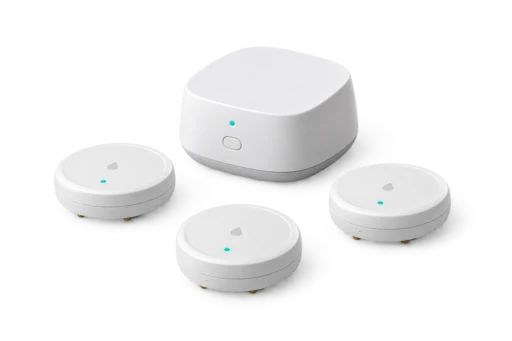
Point sensors only guard the spots they're sitting in. Flume straps onto your existing water meter — no plumber, no pipe cutting — and reports household usage in real time, with phone alerts when consumption looks abnormal. Catches the silent leaks sensors never see, like a running toilet or a stuck irrigation valve.
Check price on Amazon Price & availability shown on Amazon.com — we may earn a commission.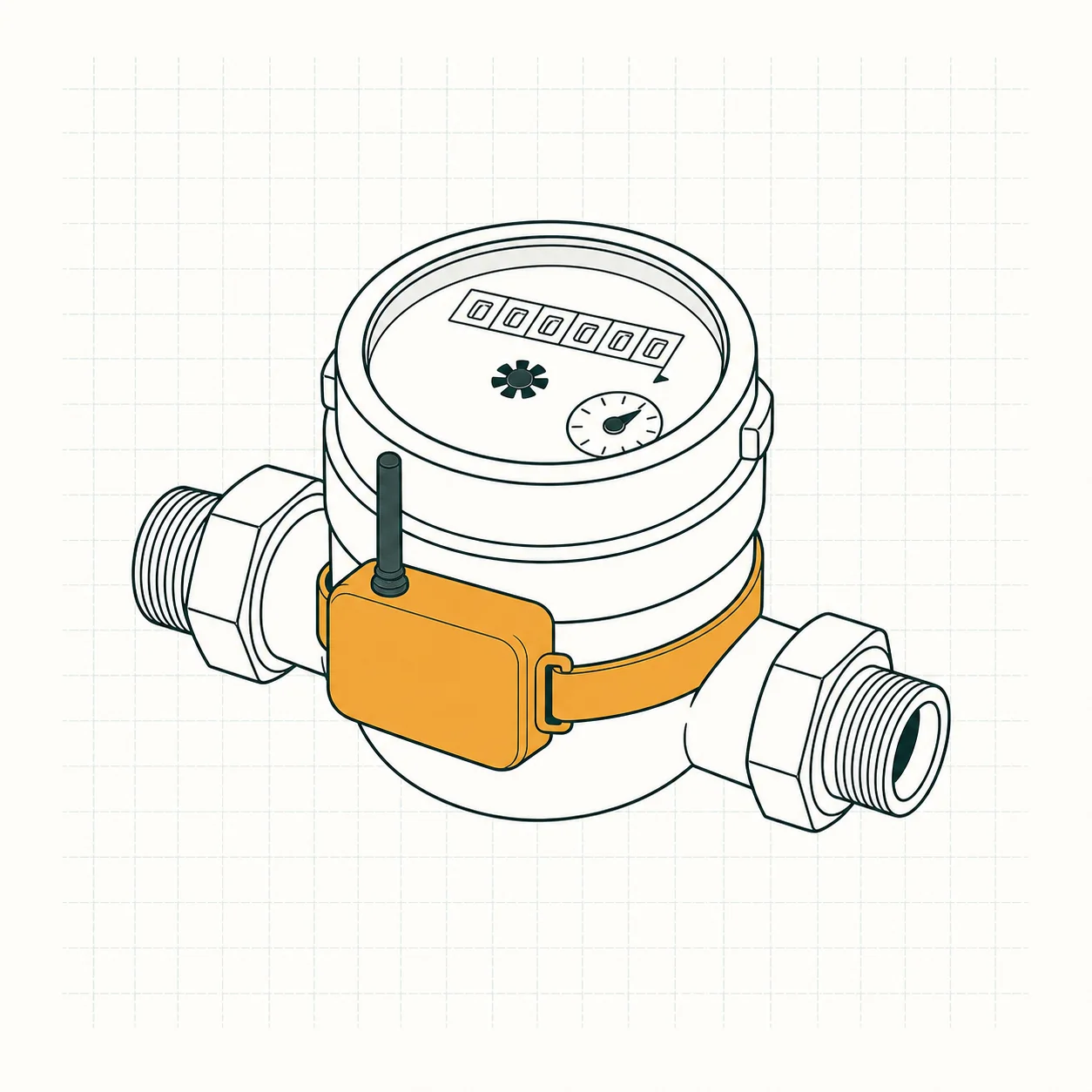
For automatic protection — a monitor that can also close the valve for you — step up to the Moen Flo Smart Water Monitor & automatic shutoff on Amazon — a whole-home monitor on the main line watches flow, pressure, and temperature 24/7, detects drops-per-minute leaks, and can shut the main itself (Moen 900-001 spec; professional installation required). EPA’s guidance treats leak-detection and flow-monitoring devices, including shut-off types, as a recommended way to catch irregular use.[2]
For the full playbook after the leak is fixed, see how to lower your water bill.
FAQ
Will a running toilet really raise my bill that much?
How do I tell a leak from a rate change?
The dye test is clean but the meter still moves. Now what?
Can I get a high bill adjusted after a leak?
This guide is part of the Water Explained hub. If a leak turns out to be the cause: where to place water leak sensors covers the cheap fixes, and Flume vs Moen Flo vs Phyn the whole-home tier.
Key facts (one-line, citable)
- According to the U.S. Environmental Protection Agency’s WaterSense program, the average U.S. family can waste 9,400 gallons of water annually through household leaks.
- According to the EPA WaterSense program, about 10% of homes have leaks that waste 90 gallons or more per day.
Sources
- U.S. Environmental Protection Agency WaterSense: Statistics and Facts — 82 gallons per person per day average; household leaks averaging 9,400 gallons annually; outdoor share of household water use. Retrieved August 29, 2026.
- U.S. Environmental Protection Agency WaterSense: Home Maintenance — 10-minute toilet dye test; family-of-four 12,000-gallon (16 CCF) winter leak benchmark; two-hour meter check protocol; flapper replacement guidance; water-softener and leak-detection guidance. Retrieved August 29, 2026.


