Quick Answer
Start with five items on your own statement: the billing period, electricity use in kilowatt-hours (kWh), meter-read status, rate-plan or tariff name, and itemized charges. The labels and prices on an electric bill are set by the serving utility and the applicable rate plan, so this guide helps you ask the right questions rather than assume every customer has the same charges.
- kWh measures electricity use. One kilowatt used for one hour equals one kilowatthour.[1]
- Actual and estimated reads are different. A utility can estimate use when it cannot read a meter and later correct the bill when it obtains a read.[3]
- Rate plans matter. A time-of-use plan can price electricity differently at different times, but the utility’s current plan details control the schedule and price.[6]
Next step: For a deeper breakdown of every charge on your statement, see the electric bill breakdown. If your bill is higher than expected, walk through why is my electric bill so high to diagnose the cause.
Start with the electric bill breakdown for a full charge-by-charge guide, or check why is my electric bill so high for troubleshooting. For gas bills, see how to read your gas bill and why is my gas bill so high. Then:
Find These Items First
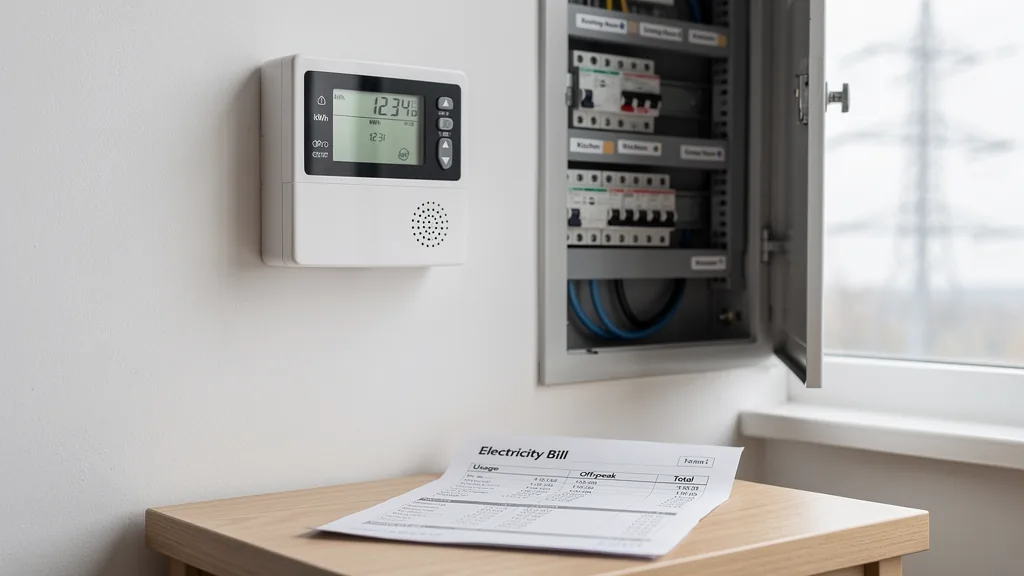
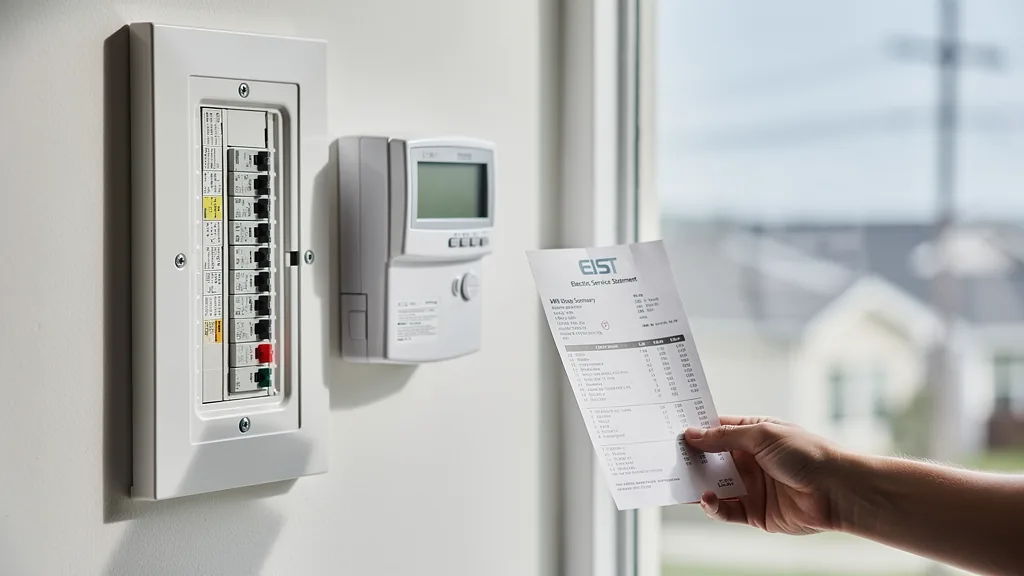
Before interpreting individual charges, locate these items on the current bill or online account:
- Billing period — the dates covered by the statement.
- Amount due and due date — the balance requested and the payment deadline.
- Electricity use — normally shown in kWh for that billing period.
- Rate plan or tariff — the plan that determines how charges are calculated.
- Meter-read status — whether the bill identifies an actual or estimated read.
- Itemized charges and credits — the descriptions and amounts used to reach the total.

Keep a copy of the bill while reviewing it. When a charge is unclear, ask the utility: “Which rate or tariff provision produced this charge?”
What a kWh Means
A kilowatt equals 1,000 watts. One kilowatt of electricity used for one hour equals one kWh.[1] A device’s energy use therefore depends on both its power draw and how long it runs.

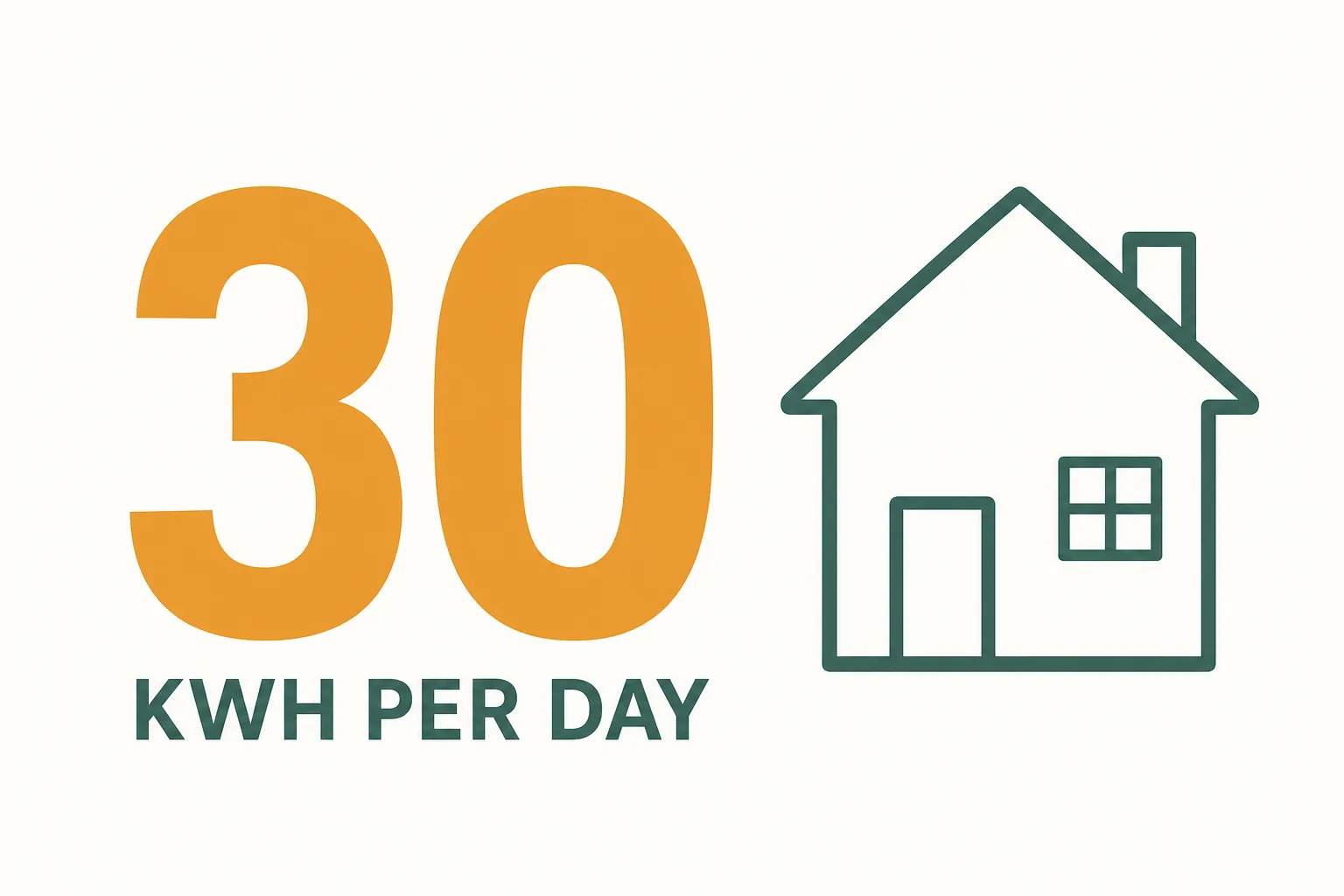
For context only, the U.S. Energy Information Administration reports that the average annual electricity purchases of a U.S. residential electric-utility customer were 10,791 kWh in 2022, or about 899 kWh/month; as of 2026 that remains EIA’s latest published average. EIA notes that grid purchases may not equal total household consumption for a customer with grid-connected, net-metered solar.[2]
For how much electricity a typical household actually uses, see understanding kWh usage — it walks through what a normal month looks like and why yours may not match the average.
Your own prior bills are more useful than a national average when reviewing your account.
Read Meter Information Carefully
If your statement shows meter information, look for:
| Item | What to check |
|---|---|
| Previous read | The earlier reading or prior billing-period value |
| Current read | The later reading or current billing-period value |
| Read type | Whether the utility identifies the read as actual or estimated |
| Multiplier, if shown | A factor the utility applies to the recorded read |
| Meter number, if shown | Whether it matches the meter serving your account |
Do not assume every meter or bill uses the same presentation. Smart meters, manual reads, interval data, multipliers, and net-metering arrangements can change what appears on a statement.
Estimated bills

A utility may estimate usage when it cannot obtain a meter read. The California Public Utilities Commission explains that an estimated bill can be corrected when the utility later obtains a meter reading.[3] An estimated bill is a reason to review the statement, not proof that the bill is wrong. Compare the billing period, read type, and later actual bill before deciding whether there is a discrepancy.
Understand the Charges on Your Statement
Charge names are not standardized nationwide. Con Edison, for example, describes supply, delivery, and tax charges on its bills.[5] Your utility may use different labels or combine categories.
Use the description on your statement and the linked tariff or rate schedule to classify each line item:
| Charge type to look for | Question to ask |
|---|---|
| Electricity or supply charge | Is it based on kWh, a fixed amount, or both? |
| Delivery-related charge | Does the bill describe it as distribution, transmission, or another delivery service? |
| Customer or service charge | Is it a recurring fixed charge for the billing period? |
| Tax, fee, rider, credit, or adjustment | What does the statement or tariff say this item funds or adjusts? |
| Program-specific charge or credit | Does it relate to a selected program, local rule, or bill adjustment? |
Do not rely on a generic “typical cost” range. The amount and calculation method for a line item depend on the utility, local rules, and your account.
Plain-English terms
| Term | General meaning |
|---|---|
| Generation or supply | The electricity commodity or the charge associated with obtaining it |
| Transmission | Moving electricity over high-voltage lines |
| Distribution | Delivering electricity through the local utility system |
| Delivery | A utility label for charges associated with getting electricity to the customer |
| Rider or adjustment | A tariff-defined charge or credit added to an underlying rate |
Use the definition printed by your own utility whenever one is available.
The line most bills split in half is delivery versus supply — one for the wires and reading, one for the electricity itself. Delivery charge vs supply charge, side by side shows where each on your statement goes.
Calculate a Bill-Wide Effective Rate
One useful comparison figure is:
Total electric charges ÷ kWh billed = effective cost per kWh

Use it only to compare similar service and similar billing periods. If a statement includes non-electric services, deposits, late fees, past-due balances, or one-time adjustments, identify those items before treating the result as an electricity price.
The effective rate is not necessarily the same as an energy or supply rate. It can reflect fixed charges, delivery-related charges, taxes, credits, and other items listed on that statement.
Check for Tiers or Time-of-Use Pricing
Some rate plans use more than one price. The statement or tariff should show whether the plan has:
- Tiered or block pricing — different usage ranges can be priced differently. To see how one month can tip you into a higher-priced block, read tiered electricity rates: how blocks work.
- Time-of-use pricing — electricity can have different prices at different times.
- Seasonal pricing — the price or time period can change by season.
- Demand-related charges — more common on commercial accounts, but the bill and tariff control.
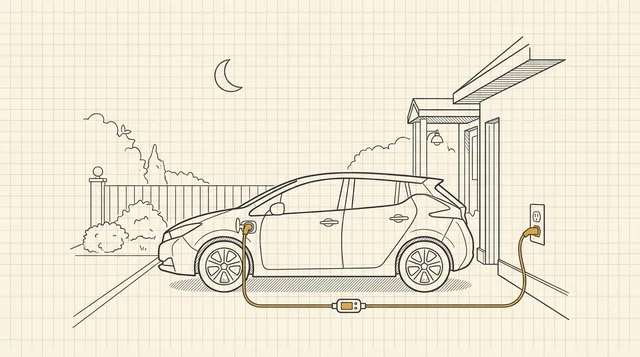
Do not use a generic peak-hour schedule. Con Edison, for example, publishes time-of-use details for eligible customers, but its plan documentation—not a national rule—sets those periods and prices.[6] If you have a time-of-use plan, compare its current schedule with flexible loads such as laundry, dishwashing, or EV charging. For how to pull the periods and prices out of your own plan documents, see time-of-use electricity plans: how to review a TOU schedule.
Review a Higher-Than-Expected Bill
A larger bill can result from more kWh used, a longer billing period, a different read type, a rate-plan change, seasonal conditions, or an itemized charge or credit. Review the statement before assigning a cause.
- Compare billing periods. Check whether the current bill covers more days than the prior one.
- Compare kWh. Review the usage total and any usage-history chart provided by the utility.
- Check the read type. Determine whether the use is based on an actual or estimated read.
- Review the rate plan. Look for a plan name, tariff reference, time-of-use period, tier, or seasonal change.
- Compare charge descriptions. Identify new or changed line items, credits, taxes, or adjustments.
- Keep records. Save the bill, relevant meter information, and notes from conversations with the utility.
If the kWh total looks right but the dollar total still doesn’t add up, work through sudden spike in electricity bill with no usage change — it covers the charges and conditions that raise a bill without raising usage.
What to Do if You Think the Bill Is Wrong
Start with the utility. The California Public Utilities Commission recommends giving the utility provider a chance to resolve a complaint through customer service before contacting the commission.[4]
Have the account number, billing period, disputed line item, relevant meter information, and prior statements ready. Ask the utility to explain the calculation and identify the applicable rate schedule or tariff. If the issue is not resolved, check the complaint process for the regulator with jurisdiction over your service.
Where to go next: Keep this page open beside your statement and work top to bottom — items first, then charges, then the higher-bill review. When you can name every line, the electric bill breakdown is the reference that keeps you fluent charge by charge; if the meter numbers themselves are the open question, how to read an electric meter shows you how to verify the raw readings behind the bill.
Related Reading
- Electric bill breakdown: every charge explained — the line-item decoder for everything on the statement.
- Why is my electric bill so high? — the full diagnosis when the total jumps.
- How to read your gas bill — the same line-by-line method for gas statements.
- Delivery charge vs supply charge: the two big halves of your bill — the split behind most charge confusion.
- Utility billing cycle: why a 35-day period costs more than 28 days — when the period, not usage, moves the total.
- Understanding kWh usage: what a normal month of electricity looks like — the baseline for judging your own usage.
Frequently Asked Questions
Why is my bill higher than another household's?
What is an estimated meter reading?
Can I choose an electricity provider?
What should I compare from month to month?
This walkthrough is part of the Electricity Explained hub and the Utility Bills Explained hub.
Sources
- U.S. Energy Information Administration: Electricity generation, capacity, and sales in the United States
- U.S. Energy Information Administration: How much electricity does an American home use?
- California Public Utilities Commission: Utility complaint FAQs
- California Public Utilities Commission: Contacting your utility provider
- Con Edison: How to read your bill
- Con Edison: Time-of-use rates
- Public Utility Commission of Texas: Choosing an electric plan